Owner-operated drain & sewer service in Ballard, Seattle

Sewer Camera Inspection in Seattle

An HD camera through your side sewer, from the cleanout toward the city main. You see what we see, keep the footage, and know the distance to every root, belly, offset joint and crack before anyone quotes a repair.

Owner answers 8 AM to 8 PM, seven days · Book online 24/7

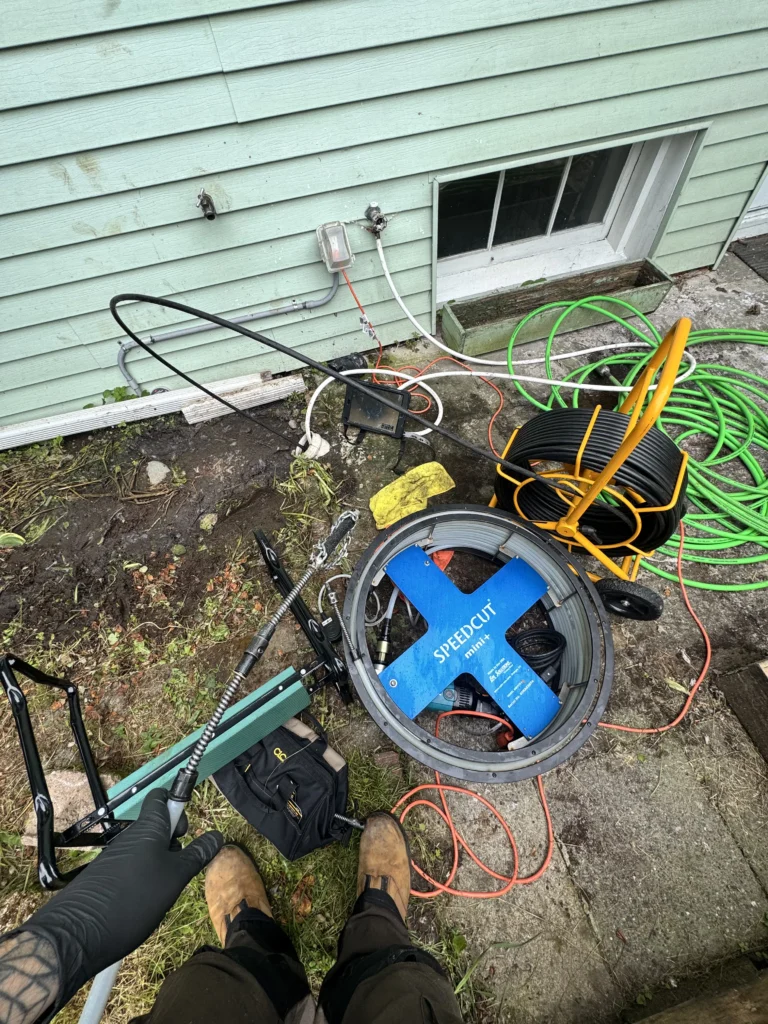
Sewer camera reel, monitor and green jetter hose staged at an open side-yard cleanout beside a house
Field photo · Camera at a side-yard cleanout

The short answer

A sewer camera inspection runs a waterproof HD camera from a cleanout through the side sewer toward the public main, recording the pipe’s material and every defect with its distance. Ours is $300–$400 flat in Seattle, the footage is yours, and we do not sell sewer repairs. Seattle Public Utilities recommends an inspection at least every 8 to 10 years, and before buying a property.

$300–$400

Flat price, footage included

To the main

Cleanout to the public sewer, not just the house

$0 trip fee

Same rate evenings & weekends

What a Seattle sewer camera inspection covers, and what it costs

One visit, one flat price, and a recording you can send to an agent, an inspector or a repair contractor the same day.

A sewer camera inspection is a video look at the side sewer, the private pipe that carries everything from the house to the city main. It tells you what the pipe is made of, where it is failing and how far out each problem sits.

Most home inspectors look at what they can see above ground; the side sewer runs under the yard, the sidewalk and often the street. Seattle Public Utilities’ maintenance guidance is direct about it: have the side sewer inspected before you purchase a property, and regularly after that.

Price
$300–$400 flat, no trip fee
Covers
From your sewer cleanout toward the public main, where access allows
You get
The video file, a defect list with distances, and pipe material notes
Good for
Home purchases, repeat backups, second opinions on repair quotes
Booking
Phones 8 AM to 8 PM daily; online booking any hour
We do not
Sell sewer repair or replacement

When a camera inspection is worth it

Most people book a camera for one of six reasons. Each one gets a different answer from the footage.

Your situation What the camera answers What usually comes next
Buying a house What the camera answersMaterial, condition and defects you would inherit at closing What usually comes nextFootage to your agent before the contingency is removed
Backups that keep coming back What the camera answersRoots, grease, a belly or an offset holding debris What usually comes nextJetting, a cleaning schedule, or a repair referral
Someone quoted a dig or a replacement What the camera answersWhether the defect is real, where it is and how big What usually comes nextA second opinion you can hand to another contractor
Big trees near the line What the camera answersRoot intrusion at joints, and how much of the pipe it fills What usually comes nextRoot cutting and a re-inspection interval
A line was just cleared What the camera answersThat it is open, and what caused the blockage What usually comes nextNothing, or a plan to keep it from returning
Selling a house What the camera answersA clean recording to share with buyers, or problems to fix first What usually comes nextDisclosure with footage, or cleaning before listing

Not sure which applies? The free drain diagnostic sorts it in a couple of minutes.

Why Seattle side sewers need a camera

Four things no listing or quote will tell you, each from the city’s own rules and guidance.

Older Seattle craftsman house with a front garden and autumn trees
Older Seattle homes often sit on clay or concrete side sewers.
  1. 01

    You own the pipe to the main, not to the property line

    Seattle Public Utilities says the property owner owns the side sewer until it connects to the public sewer pipe, and Seattle Municipal Code Chapter 21.16 covers maintenance and repair. That includes the run under the sidewalk and street.

    Source: Seattle Public Utilities
  2. 02

    Older concrete and clay joints are where roots get in

    SPU says roots are a common problem in side sewers, and that older concrete and clay pipe built without watertight joints is especially at risk. It recommends regular scoping where pipes are old and tree canopy is dense.

    Source: SPU, Side Sewer Defects & Issues
  3. 03

    A repair is priced by the foot

    SPU’s homeowner guide puts a no-dig repair, relining or pipe bursting, at roughly $100–$170 per foot. Footage that shows exactly where the defect sits keeps that number from being the whole yard.

    Source: SPU, Taking Care of Your Sewer Pipe
  4. 04

    Some side sewers are shared with a neighbor

    From the point where two pipes join, the owners share maintenance and repair. The side sewer card often shows the route and any shared section before the camera goes in.

    Source: SPU, Side Sewer Defects & Issues

What the camera finds, and what Seattle says to do about it

SPU grades common side sewer defects by severity. This is how those grades translate into a decision.

Defect What it looks like on camera SPU guidance What it means for you
Root intrusion What it looks like on cameraFine roots at joints, up to a mass that fills the pipe SPU guidance Minor: re-inspect 3–5 yrs 50%+: inspect 1–2 yrs, clean What it means for youCleanable. Get a cleaning price and a re-inspection plan, and note the joint the roots came through.
Offset joint What it looks like on cameraPipe segments that no longer line up SPU guidance Minor: no repair Moderate: re-inspect Severe: repair What it means for youSevere offsets let soil wash in and can lead to voids and sinkholes; that is a repair conversation.
Sag or belly What it looks like on cameraWater sitting in a flat or low section SPU guidance Under 25%: minor 25–50%: inspect 2–5 yrs 50%+: higher backup risk What it means for youBellies collect debris. A deep one often means regular cleaning or a spot repair.
Cracks and fractures What it looks like on cameraLines or breaks in the pipe wall SPU guidance Minor: 3–5 yrs Moderate: 1–2 yrs, plan repairs Severe: repair What it means for youModerate cracks are a budget line; severe ones are near structural failure.
Exposed aggregate What it looks like on cameraRough, rocky interior in concrete pipe SPU guidance Moderate: 1–2 yrs, plan repairs Severe with holes: replace What it means for youA common, critical defect in Seattle’s concrete side sewers. Severe means the pipe has failed even if it still drains.
Holes What it looks like on cameraMissing pipe wall, soil or voids visible SPU guidance Repair What it means for youA repair item. The distance on the video tells the contractor where to dig or line.
Grease and debris What it looks like on cameraBuildup narrowing the pipe SPU guidance Under 25%: minor 25%+: routine cleaning What it means for youUsually a cleaning, not a repair, unless a defect underneath is causing it.

Severity grades and intervals summarized from Seattle Public Utilities, Side Sewer Defects & Issues. This is not legal or real estate advice.

You see the same picture we do

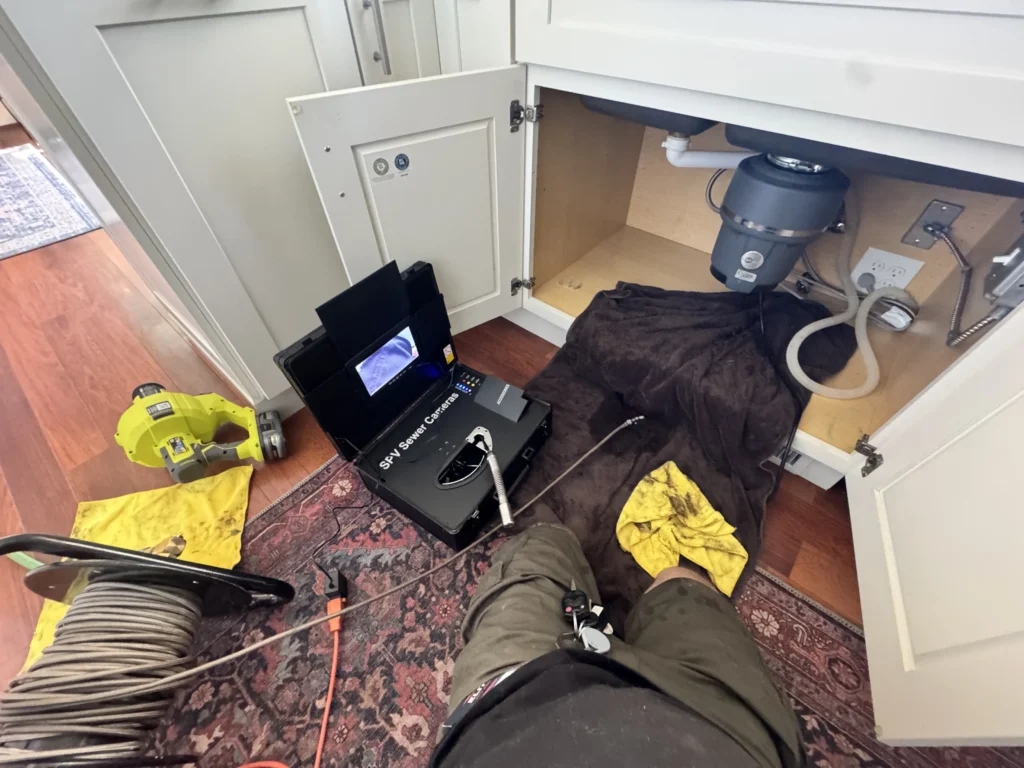
The monitor shows the pipe as the camera travels, with a running distance counter. You get the file afterward, and every defect is called out by its distance from the cleanout.

Sewer camera monitor and cable reel set up at an open kitchen sink cabinet beside the garbage disposal
MonitorThe live picture during a camera pass
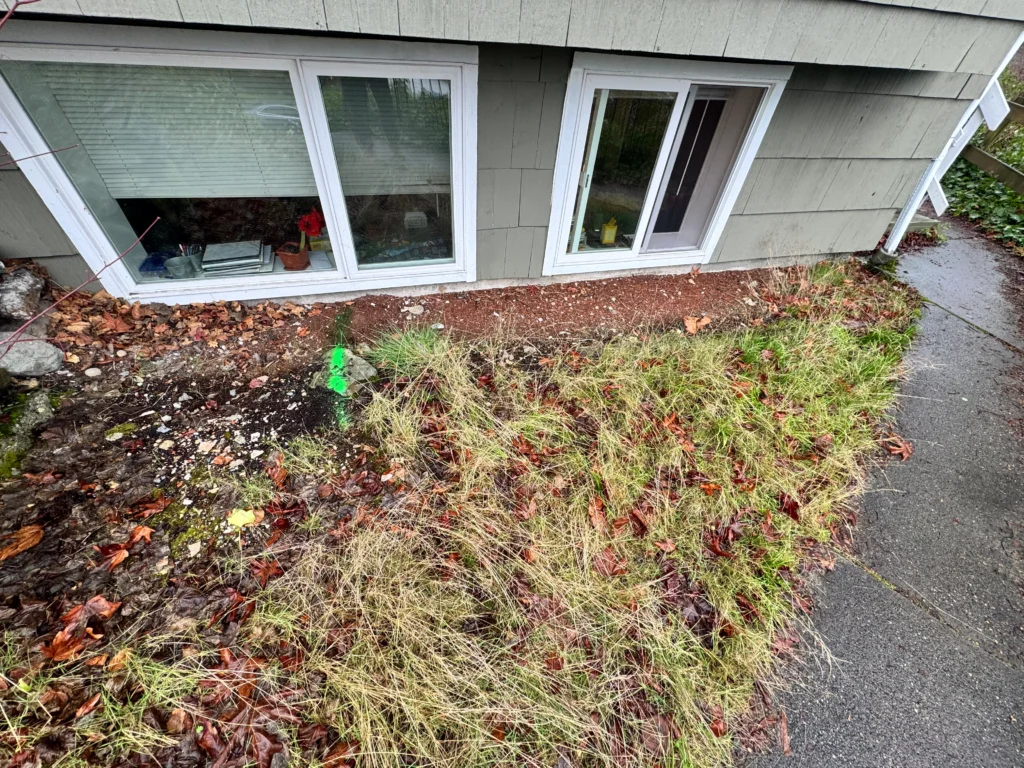
Green sewer cleanout cap in the side yard of a house, beside the foundation
AccessThe yard cleanout the camera runs from

To the main, not the property line

The part of the pipe an owner is responsible for does not stop at the fence. We run the camera as far toward the public main as the line allows.

Every defect by distance

Roots at 42 feet and a belly at 61 feet is a repair bid. “Some roots” is not. The counter on the recording does the measuring.

No repair to sell you

We clean drains and run cameras; we do not replace sewer lines. The company scoping your pipe has nothing riding on the answer.

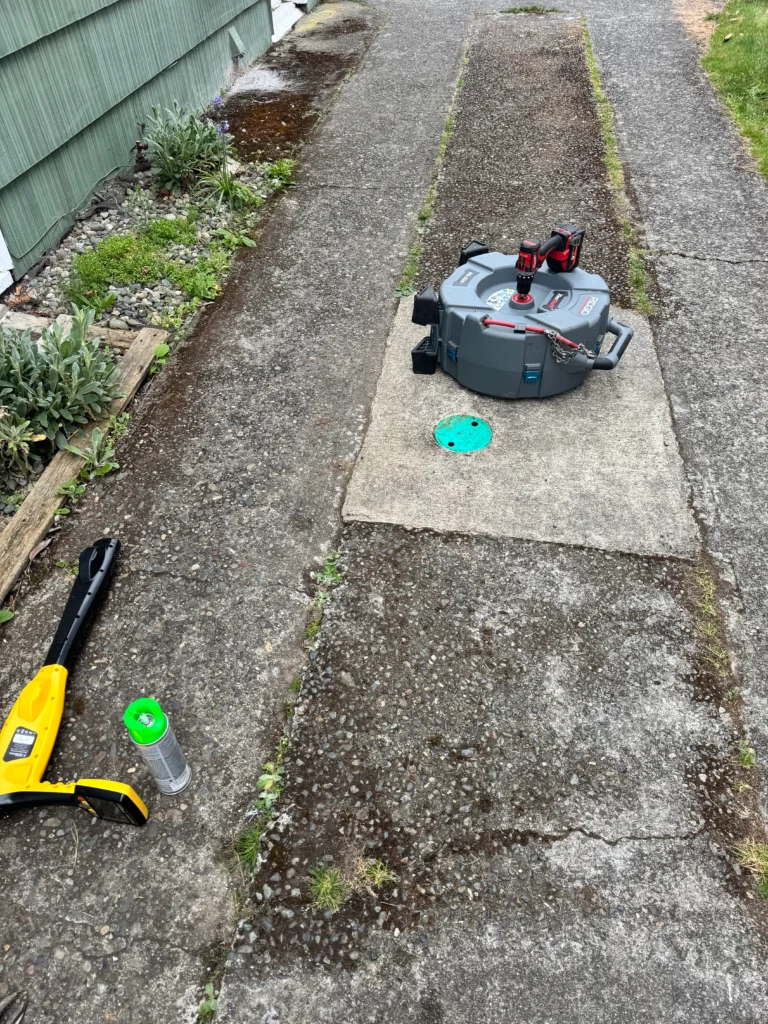
Drain machine set on a concrete side walkway beside an open sewer cleanout
Side-walkway cleanout opened for the camera
Sewer cleanout riser exposed in a hand-dug hole
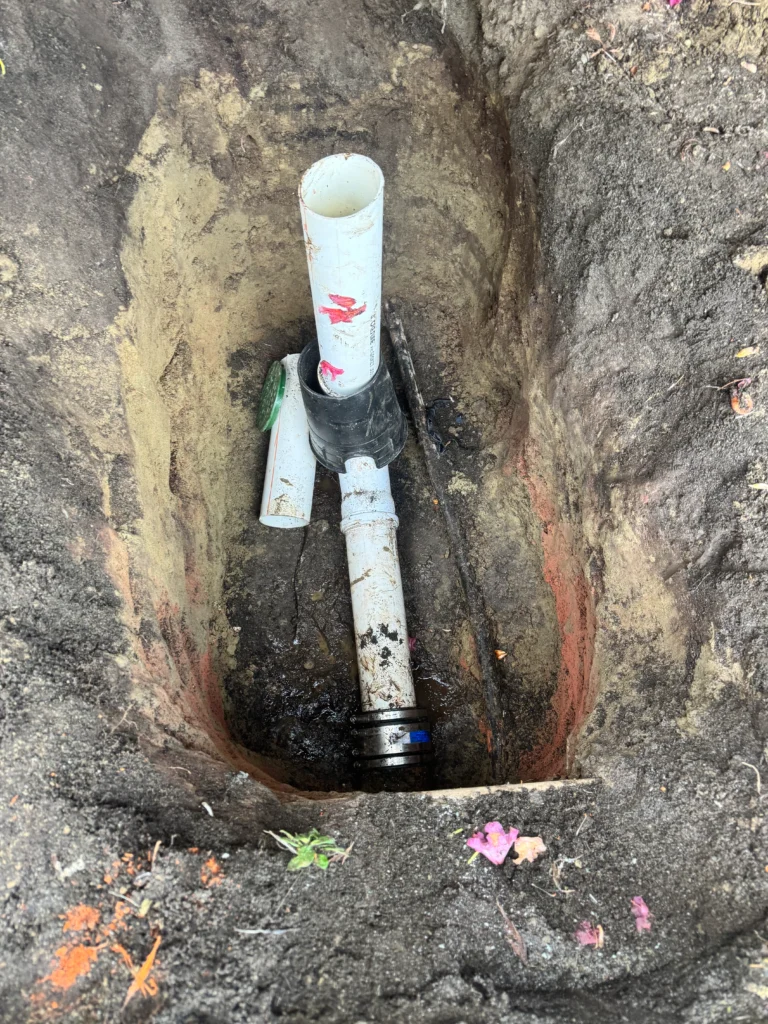
Cleanout riser dug out for access
Older house with mature trees and a planted front garden
Mature trees over an older lot: the root risk a camera checks
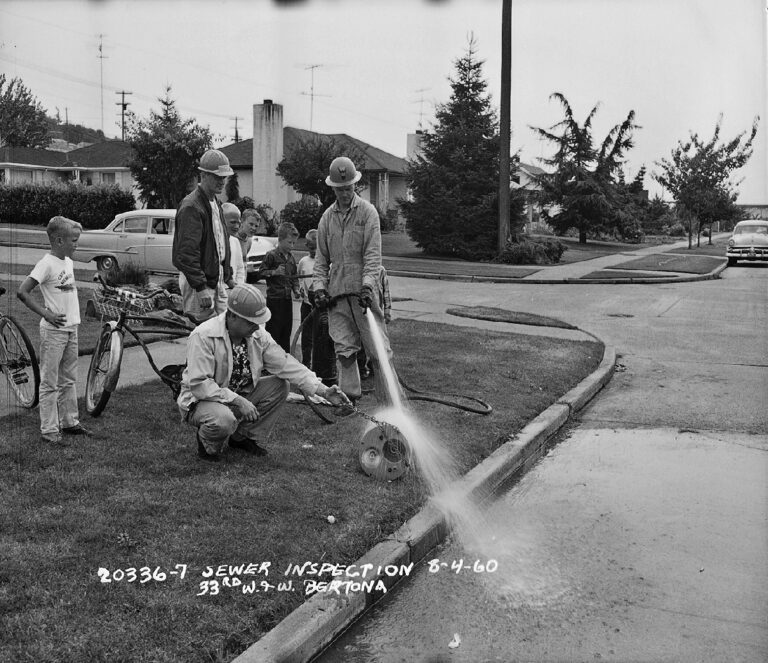
Seattle sewer inspection crew working at a manhole on a Magnolia street in 1960 while neighborhood boys watch
A Seattle sewer inspection crew in Magnolia, 1960.

Buying a house? How a pre-purchase sewer scope works

From the first call to the file in your inbox, built around the inspection period in your purchase contract.

  1. Step 1

    Book inside your deadline

    Call or book online with the address and your contingency deadline. Tell us if the seller has an access preference.

  2. Step 2

    Find the cleanout

    We locate the access point. The city’s side sewer card often shows where the pipe runs and any shared section.

  3. Step 3

    Run the camera

    The HD camera travels the side sewer toward the public main, recording the whole way.

  4. Step 4

    Walk through it

    We go through what the camera found with you, defect by defect.

  5. Step 5

    Footage & notes

    You get the video and our notes on material, defects and distances to share with your agent.

Book a sewer scope before your contingency runs out

Pick a slot online any hour, or call and the owner answers. One flat price of $300–$400, no trip fee, and the footage is yours.

What a complete sewer camera inspection should include

Use this list with any company you call. If the answer to the left column is “not usually,” you are buying a partial look at the most expensive pipe on the property.

What to check A quick look Our camera inspection
Camera goes toward the public main Stops at the property line or the first obstruction Runs toward the main as far as the line allows
Each defect located by distance General notes only Distance from the cleanout for every defect
You keep the recording Varies, sometimes stills only The full video file is yours
Pipe material identified Not always Clay, concrete, cast iron, ABS or PVC noted by section
Side sewer card checked Rarely Checked together: the SPU card shows route and shared sections
Price known before the visit Varies $300–$400 flat, $0 trip fee
The inspector sells the repair Sometimes No. We do not do sewer replacement

How much does a sewer camera inspection cost in Seattle?

A flat price for the video, the defect list and a straight read on what it means.

Our flat price

$300–$400

Cleanout toward the public main, where access allows

  • HD video of the side sewer
  • Defect list with distances
  • Pipe material notes
  • The video file is yours to keep

A sewer camera inspection from The Drain Authority costs $300 to $400 in Seattle, flat, with no trip fee. You get the recording, a list of defects by distance from the cleanout and notes on the pipe material, ready to send to an agent, an inspector or a repair contractor the same day.

Seattle average
Angi’s 2026 Seattle data lists sewer line camera inspections at $451–$3,342, averaging $1,781. Angi: Seattle camera inspection cost
Never added
A trip fee, an hourly meter, or an evening or weekend surcharge
We do not
Sell sewer repair or replacement, so the footage has no sales angle
If it needs cleaning
Hydro jetting $500–$700; cast iron descaling from $800

If the camera finds something, here is what the cleanable parts cost

Roots, grease and scale are cleaning problems, not dig problems. Structural defects go to a repair contractor with the footage.

Seattle side sewer rules every owner and buyer should know

The city sets who owns what, where the records live and what help exists for repairs. All of it is public; most owners never see it.

  • You own it to the main

    Seattle Public Utilities: the owner’s side sewer runs all the way to the public sewer main, including the section under the sidewalk and street. SPU: Your Side Sewer · SMC 21.16

  • Pull the side sewer card first

    The city’s Side Sewer Cards and Map tool shows the permitted route and sometimes a shared line. SPU’s Records Vault closes December 15, 2026 through August 1, 2027; side sewer cards are already digitized. Our guide to the closure.

  • Trees change the schedule

    SPU recommends inspecting at least every 8 to 10 years, and every 2 to 3 years with large trees or shrubs near the line. SPU homeowner guide (PDF)

  • Help exists for repairs

    Seattle’s Office of Housing runs a Side Sewer Assistance Program with interest-free loans for income-eligible homeowners who need a side sewer repair.

  • Check who you hire

    Washington L&I lists every registered contractor and its specialty. Verify a contractor; ours is #DRAINDA756MA.

Sewer camera inspection FAQ

Straight answers for owners, buyers, sellers and agents. More in the Seattle drain & sewer FAQ, or read the Ballard side sewer report.

Still have a question?

Shane answers the phone himself, 8 AM to 8 PM, seven days a week.

How much does a sewer camera inspection cost in Seattle?

Ours is $300–$400, flat, and the footage is yours to keep. Seattle Public Utilities’ homeowner guide says a sewer video inspection generally costs $230–$845 depending on the pipe’s condition, so ask any company what is included before you book.

What does a sewer camera inspection show?

The camera runs from the cleanout through the side sewer toward the public main and records pipe material, roots, offset joints, sags, cracks, holes, exposed aggregate in concrete pipe, and grease or debris, with the distance from the cleanout to each one.

How often should a Seattle side sewer be inspected?

Seattle Public Utilities recommends inspecting a side sewer at least every 8 to 10 years, and at least every 2 to 3 years when large trees or shrubs grow near it. SPU also recommends an inspection whenever you buy a property.

Should I get a sewer scope before buying a house in Seattle?

Yes. Seattle Public Utilities’ maintenance guidance says to have the side sewer inspected before you purchase a property, because the new owner is responsible for the pipe all the way to the public main. Book it inside your inspection period, before the contingency is removed.

Who is responsible for the side sewer in Seattle?

The property owner. Seattle Public Utilities says the owner’s side sewer runs until it connects to the public sewer main, including the section under the sidewalk and street. Where two properties share a line, the owners share responsibility from the point the pipes join.

Do you repair the problems the camera finds?

We clean what can be cleaned: roots, grease and scale. We do not repair or replace sewer pipe, so structural defects are referred out with the footage, and the distance on the recording lets a repair contractor bid the exact section instead of the whole yard.

Can I keep and share the inspection video?

Yes. The recording is yours to share with your agent, the seller, an inspector or a repair contractor, along with our notes on what we found and where.

What if there is no cleanout?

We look for the best available access point. The city’s side sewer card often shows where the line was run and where a cleanout was placed. If no usable access exists, we tell you before any work is priced.

Sources and Seattle references

Every rule, interval and outside price range on this page comes from these public sources. Our own prices are flat Seattle rates for standard service, reviewed October 2026.

Buying, selling or chasing a repeat backup? Tell us about the line.

Send the address and what is going on. If you are buying, include your inspection deadline and we will give you the earliest slot.

  • The property address
  • Your deadline, if you are buying
  • Any past backups or cleanings
  • Where the cleanout is, if you know

The Drain Authority

5608 17th Ave NW, Suite 2025
Seattle, WA 98107
Hours
Daily, 8 AM to 8 PM
Booking
Online, 24/7
License
WA contractor #DRAINDA756MA