SPU Says It’s Drainy Season. The Drain Lines You Own Need a Camera, Not a Rake
October 26th, 2026
Seattle Drain & Sewer News
Seattle, WA · October 26, 2026
By The Drain Authority · Reviewed by Shane Caldwell, Owner & Lead Drain Technician · WA Contractor Reg. #DRAINDA756MA
Seattle Public Utilities declared it “drainy season” Monday, asking residents to rake leaves before they reach the street and to clear storm drains safely as the fall rains start. That’s the public half of the system. The same SPU post links to a page with a less-quoted line for property owners: maintaining your own drainage system is your job, and SPU says to have it video inspected.
The short answer
What does drainy season mean for my own drain lines?
SPU handles the storm drains and pipes in the street. Everything on your side, including underground drain lines, area drains, catch basins and the side sewer, is yours to maintain. SPU tells owners to hire a professional to regularly video inspect underground drainage. A drain camera inspection before November, Seattle’s wettest month, shows roots, sediment and breaks while they’re still cheap to fix.
Oct. 26
SPU’s drainy-season alert
6.31 in
Normal November rain at Sea-Tac, the wettest month
+61%
November’s normal rain vs. October’s
10 bags
Extra leaf bags SPU takes free each November pickup
What SPU asked residents to do
SPU’s October 26 post is about leaves: they clog storm drains and can cause street flooding on rainy days. SPU asks residents to rake before leaves reach the street, clear drains safely with gloves and tools while working from the curb, and report any drain that can’t be cleared safely through the city’s Find It, Fix It app. Leaves pulled off a storm drain go in the garbage, not yard waste, because of contamination.
To help, SPU food and yard waste customers can set out up to 10 extra bags of leaves each collection day in November at no charge. The post ends with a short list for being weather ready, including a link to SPU’s page on private drainage system maintenance.
Where the city’s job ends and yours begins
SPU says it “builds and manages the publicly owned drainage system,” and that private systems often connect to it. The line between the two is the part most people never see:
Report it on Find It, Fix It
SPU’s side
Street storm drains and catch basins
Public drainage pipes, culverts and ditches
Maintenance holes and outfalls
The public sewer main under the street
Video inspect it
Your side
Area drains and yard catch basins
Underground drain lines and footing drains
The side sewer, all the way to the public main
Cleanouts, and any backwater valve you have
SPU’s own words
“Maintaining your property’s drainage system is your responsibility.” SPU’s list for owners includes this: “Hire a professional to regularly ‘video inspect’ your underground drainage system.” Source: SPU Drainage System.
Why the timing matters: November is the wettest month
On NOAA’s 1991 to 2020 normals for Sea-Tac, rainfall jumps from 1.61 inches in September to 3.91 in October and 6.31 in November, the wettest month of the year. December and January stay close behind. This October has run far drier than normal so far, which means the bigger storms are still ahead of most drain lines.
Normal monthly rain at Sea-Tac
Inches, NOAA 1991 to 2020 climate normals. The wet season peaks in November.
September1.61 in
October3.91 in
November6.31 in
December5.72 in
January5.78 in
Source: NOAA NCEI, monthly normals for Seattle-Tacoma International Airport (USW00024233).
The angle most coverage misses: raking can’t reach the clog that floods a basement
Drainy-season coverage stops at the curb, because that’s where SPU’s ask stops. But the drain lines most likely to cause trouble for a homeowner are buried: a yard drain full of silt, a footing drain with roots in the joints, a side sewer with a sag that holds water.
None of those show up until they fail, and they tend to fail in the first sustained rain, when every connected surface is sending water at once. In some older Seattle neighborhoods, King County notes, roof and foundation drains even flow into the sewer, so a storm loads the same pipe your toilets use.
That’s why SPU’s answer for private lines isn’t a rake. It’s a camera.
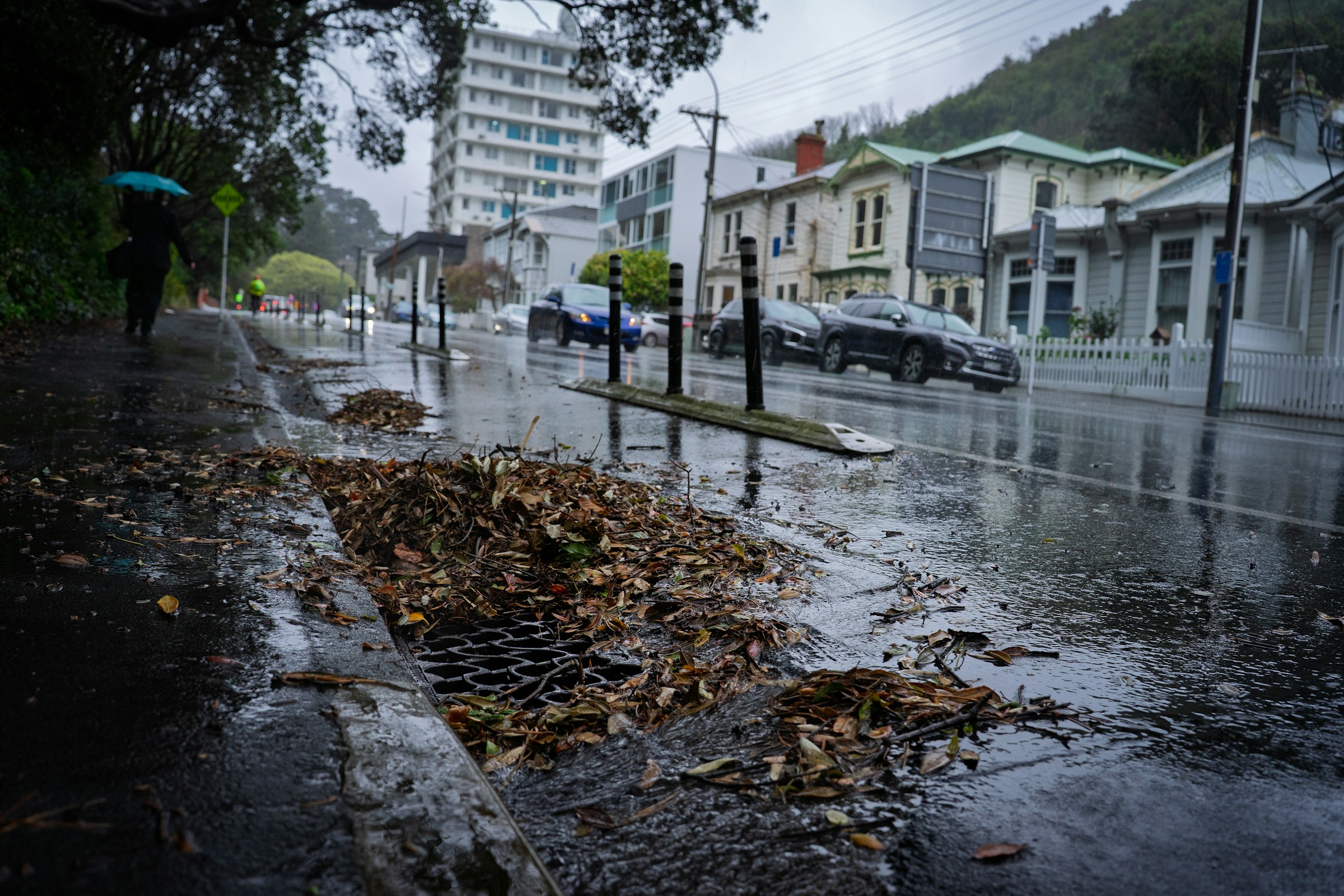
Surface water finds the drain. What happens after the grate, in the buried line, is what a camera inspection is for. Photo: Unsplash.
What a drain camera inspection shows, and what fixes it
Camera finds
What it means
Usual fix
Roots at joints
Water is getting out, and roots are getting in
Cable and root cutter, then follow-up camera
Silt, sediment or sludge
Line is losing capacity
Hydro jetting
Grease on pipe walls
Common in kitchen and main lines
Hydro jetting
Sag or belly holding water
Debris settles at the low spot
Clean and watch; repair if severe
Offset or separated joint
Soil and water can enter
Watch, or repair referral if severe
Cracked or broken pipe
Structural problem
Repair referral; cleaning won’t fix it
Severity guidance follows SPU’s Side Sewer Defects & Issues page.
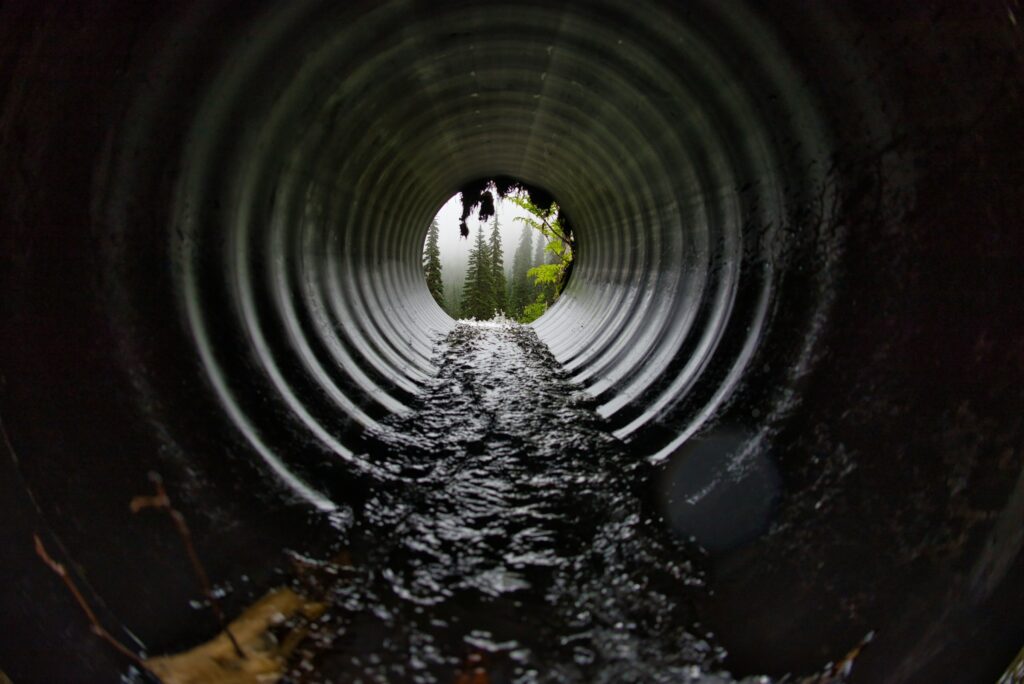
Looking down a drain pipe, the same view a camera gives from inside your line: standing water, debris and every joint along the way. Photo: Unsplash.
A pre-storm drain checklist for Seattle owners
01
Clear what you can see
Rake leaves and keep area drain grates and yard catch basins open. That’s the part SPU’s drainy-season post asks for.
02
Report public drains, don’t climb into them
If a street drain can’t be cleared safely from the curb, use Find It, Fix It.
03
Camera the lines you can’t see
SPU says to video inspect underground drainage regularly. A sewer and drain camera inspection records the problems and the distance to each one.
Find it now, check the cap, and make sure it’s reachable at night in the rain.
Service
Seattle price range
Sewer or drain camera inspection
$300 to $500
Main line cable cleaning
$450 to $900
Hydro jetting, typical residential
$700 to $1,400
The Drain Authority’s published 2026 Seattle ranges for standard business-hour service. Access, line length, pipe condition and after-hours timing move the number. Diagnosis trip: $0.
In an October 26, 2026 post, Seattle Public Utilities asked residents to rake leaves before they reach the street, safely clear leaves from storm drains, and report drains they can’t safely clear through the Find It, Fix It app. SPU food and yard waste customers can set out up to 10 extra bags of leaves each collection day in November at no extra charge.
Who is responsible for underground drain lines on my property in Seattle?
SPU says maintaining your property’s drainage system is your responsibility. SPU builds and manages the public drainage system; private systems often connect to it. In Seattle, the property owner also owns the side sewer all the way to the public sewer main.
Does SPU recommend a drain camera inspection?
Yes. On its drainage system page, SPU tells property owners to hire a professional to regularly video inspect their underground drainage system. For side sewers, SPU recommends a camera inspection at least every 8 to 10 years, and every 2 to 3 years if large trees or shrubs grow nearby.
How much more rain does Seattle get in November than October?
On NOAA’s 1991 to 2020 normals for Sea-Tac, October averages 3.91 inches and November 6.31 inches, about 61% more. November is the wettest month of the year on those normals.
What does a drain camera inspection find?
A camera shows roots at joints, sediment and debris, sags where water sits, offset or separated joints, and cracked or broken pipe, along with the distance to each problem. Roots and sediment can usually be cleaned with a cable or hydro jetting; broken pipe goes to a repair contractor.
The Drain Authority is a drain cleaning, sewer camera inspection and hydro jetting company serving King and Snohomish counties from Ballard. Photos via Unsplash as credited.