Seattle’s Ship Canal Tunnel Is Finished. It Won’t Start Working Until 2027.
October 19th, 2026
Seattle Sewer & Utility News · Ship Canal
SEATTLE, WA – October 19, 2026
By The Drain Authority · Reviewed by Shane Caldwell, Owner & Lead Drain Technician · WA Contractor Reg. #DRAINDA756MA
The 2.7-mile storage tunnel under Ballard, Fremont and Wallingford is finished. Lane, the contractor that bored it, announced completion of the Ship Canal Water Quality Project on October 14, 2026. But Seattle Public Utilities lists the tunnel as operational in 2027, and the Ballard pipes that will feed it are still under construction. For homeowners in the city’s combined-sewer neighborhoods, this storm season runs on the same system as the last one.
The short answer
Is the Ship Canal tunnel done?
The tunnel itself is built. Lane reached substantial completion in November 2025 and announced the finished Ship Canal Water Quality Project tunnel on October 14, 2026. It is not yet capturing overflows: Seattle Public Utilities lists the storage tunnel as operational in 2027, with conveyance pipes in Ballard still under construction. Once running, it will store more than 29.6 million gallons during storms and keep an average of 75 million gallons a year of polluted stormwater and sewage out of the Ship Canal, Salmon Bay and Lake Union. It does not cover private side sewers.
2.7 mi
Length of the storage tunnel
29.6M gal
Stored during a storm (more than)
75M gal
Overflow kept out of local water each year, on average
2027
When SPU lists the tunnel as operational
What was announced on October 14
Lane, the U.S. subsidiary of the Webuild Group, said it has completed the Ship Canal Water Quality Project, the underground storage tunnel Seattle Public Utilities commissioned in partnership with King County. Lane’s release says the job reached Substantial Completion in November 2025. The October announcement closes out the contract.
The tunnel runs 2.7 miles with an internal diameter of 18 feet, 10 inches. It was bored with a 20-foot tunnel boring machine named MudHoney, according to Tunnel Business Magazine. Webuild’s press note says it will capture and temporarily hold more than 29.6 million gallons of excess flow during storm events, then send it on for treatment once conditions subside.
Item
Figure
Source
Tunnel length
2.7 miles
Webuild, SPU
Internal diameter
18 ft 10 in
Webuild
Storage during a storm
29.6M+ gallons SPU rounds this to more than 30 million
Webuild, SPU
Overflow reduction
75M gallons a year, on average
SPU, Webuild
Share of SPU’s overflow volume
About 70%, based on the last five years
SPU
Tunnel contract
$255M
Webuild
Overall project
Around $710M
SPU
The two cost figures measure different things: Webuild’s number is its tunnel contract, while SPU’s covers the whole Ship Canal Water Quality Project.
Why “complete” doesn’t mean “running” yet
A storage tunnel is one piece of a larger system. SPU’s project page breaks the work into parts: the storage tunnel (completed), conveyance pipes in Wallingford (completed), conveyance pipes in Ballard (under construction), and a new pump station at the 107-foot-deep shaft used to launch the tunneling machine. That pump station will move stored flows to King County’s West Point Treatment Plant. SPU lists the storage tunnel as operational in 2027.
Until the pipes that feed the tunnel and the pumps that empty it are in service, the tunnel can’t do its job. That job is catching the overflow that spills from outfalls into Salmon Bay, the Ship Canal and Lake Union when heavy rain overwhelms shared pipes. The 2026–27 storm season runs on the existing system.
Why Ballard, Fremont and Wallingford have this problem
In several of Seattle’s older neighborhoods, including Ballard, Fremont, Wallingford and Queen Anne, stormwater and sewage share a single pipe. In dry weather that works. In a heavy storm, rain fills the same pipes your toilets and kitchen drains empty into, and when capacity runs out the system overflows into local water. Those combined sewer overflows are what the tunnel exists to catch.
SPU says the project will serve Crown Hill, Ballard, Fremont, and parts of Wallingford, Queen Anne, downtown and Capitol Hill, and that it targets about 70% of SPU’s total overflow volume based on the last five years of data.
The angle most coverage is missing
Every announcement about the tunnel describes what happens at the outfalls. None explains what it means at the house. The tunnel holds overflow from the public system. It does nothing for the pipe that connects a home to that system.
SPU is direct about where its responsibility ends. If you own a home or building in Seattle, you own the side sewer all the way to the public sewer main, including the stretch beyond your property line. Maintenance and repair are covered under Seattle Municipal Code Chapter 21.16. No tunnel, rate increase or capital program clears a root-filled side sewer or repairs a cracked one.
That matters most in the neighborhoods this project serves. In a combined-sewer area, a side sewer drains into a main that also carries storm runoff. A line that is already narrowed by roots or grease has less margin when flows rise, and the first warning is often a slow floor drain or a gurgling toilet during heavy rain.
What to do before the next atmospheric river
Know what you own. Your side sewer runs from the house to the city main. Our Ballard side sewer report explains how to read the city’s records for your address, and our earlier piece on the tunnel and your side sewer covers the ownership line in detail.
Look before a backup, not after. A sewer camera inspection in Ballard shows roots, offset joints, sags and cracked clay before they turn into a basement call.
Check your backwater valve if you have one. SPU notes that some Seattle properties have backwater valves to help prevent sewer backups, and that the owner is responsible for maintaining them.
“The tunnel is going to do a lot for Salmon Bay. It won’t do anything for the pipe between your house and the street. When a basement drain backs up during a heavy rain around Ballard, the cause we find is usually on the homeowner’s side: roots at a joint, or a line that’s been narrowing for years without anyone looking at it.”
Shane Caldwell, Owner & Lead Drain Technician, The Drain Authority
Live near the Ship Canal? See your side sewer before the storm does.
We’re based in Ballard. A camera inspection shows the condition of the full run from your cleanout toward the city main, so you know whether it needs cleaning, repair or nothing at all.
Yes. Lane, the contractor, announced completion of the Ship Canal Water Quality Project tunnel on October 14, 2026, after reaching substantial completion in November 2025. Seattle Public Utilities lists the storage tunnel as operational in 2027.
How much will the Ship Canal tunnel hold?
The 2.7-mile tunnel is built to store more than 29.6 million gallons of combined stormwater and sewage during a storm and to keep an average of about 75 million gallons a year out of the Lake Washington Ship Canal, Salmon Bay and Lake Union.
How much did the Ship Canal tunnel cost?
Webuild describes its tunnel contract as a $255 million project. Seattle Public Utilities puts the cost of the overall Ship Canal Water Quality Project at around $710 million.
Does Seattle have a combined sewer system?
Parts of it do. In several older neighborhoods, including Ballard, Fremont, Wallingford and Queen Anne, stormwater and sewage share a single pipe system that can overflow into local waterways during heavy rain.
Does the tunnel protect my house from a sewer backup?
Not directly. The tunnel stores overflow from the public system. In Seattle, the property owner owns the side sewer all the way to the public sewer main, so its condition remains the owner’s responsibility.
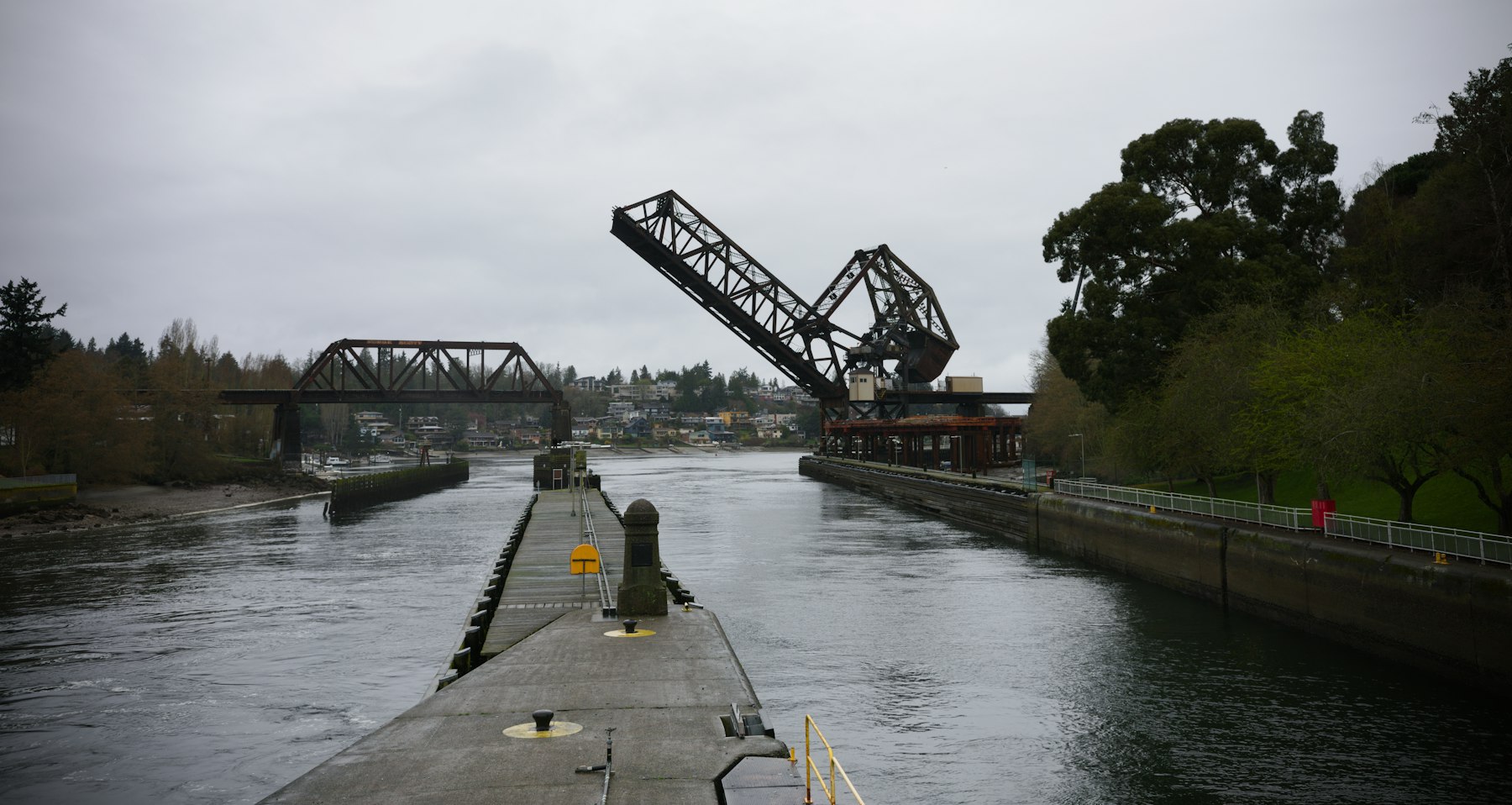
The Drain Authority is a drain and sewer specialist serving King and Snohomish counties from Ballard. Project figures are as published by Lane, Webuild and Seattle Public Utilities at the time of writing. Featured photo: the Salmon Bay bridge over the Ship Canal at the Ballard Locks, by Valorie Barela on Unsplash.