Trenchless Sewer Repair in Seattle: Why One Job Relined a Pipe and the Other Dug Up 12th and Pike
October 24th, 2026
Seattle Sewer & Utility News · Sewer Repair
SEATTLE, WA – October 24, 2026
By The Drain Authority · Reviewed by Shane Caldwell, Owner & Lead Drain Technician · WA Contractor Reg. #DRAINDA756MA
Two of this year’s sewer repairs in Seattle wrapped up within weeks of each other, and they could hardly have gone more differently. King County relined a corroded sewer main under Beach Drive Southwest in West Seattle and declared the job complete in October. Seattle Public Utilities spent the summer excavating the intersection of 12th Avenue and East Pike Street on Capitol Hill, where crews ran into unmapped wiring, old concrete and tangled utility lines. The contrast is the same choice homeowners face with their own side sewers: line it or dig it.
The short answer
What is trenchless sewer repair?
Trenchless sewer repair fixes a damaged sewer pipe from the inside or through small access points instead of digging a trench along its full length. The most common method is lining, which forms a new pipe inside the old one. King County used relining this year to rebuild 350 feet of corroded sewer main in West Seattle. Whether lining works on a home’s side sewer depends on the condition of the pipe, which a sewer camera inspection shows before anyone picks up a shovel.
350 ft
Corroded force main relined under Beach Drive SW
2
New air valves added to slow corrosion
6 weeks
12th & Pike closures after the timeline doubled
Sept 25
Date 12th & Pike reopened to traffic
West Seattle: a corroded main, rebuilt from the inside
The Murray Pump Station in West Seattle pushes sewage through two pressurized pipes, called force mains, that run side by side under Beach Drive Southwest toward King County’s West Point Treatment Plant. In March 2022 one of them broke from severe corrosion, and the county repaired about 800 feet of it at the time, according to the Murray Force Main Rehabilitation project page.
This year’s project rebuilt the remaining 350 feet and installed two air valves to help reduce corrosion in the repaired pipe. The work had to happen in the dry season, when wastewater flows are lower. By mid-August the county reported the pipe liner was installed, and in October it announced that construction was complete and the relined pipe and new valves were serving West Seattle. With the utility work done, SDOT has started the final block of the Alki Point Healthy Street path, the West Seattle Herald reported on October 23.
Capitol Hill: an excavation that ran long
Across town, Seattle Public Utilities began repairing sewer pipes at East Pike Street and 12th Avenue in early July as part of its work on aging sewer infrastructure in the area. Excavation crews ran into unmapped wiring, old concrete and tangled utility lines, and the summer closure timeline doubled to six weeks, CHS Capitol Hill Seattle reported. SPU reopened the intersection on September 25 and scheduled sidewalk and ADA ramp restoration through late October.
Beach Drive SW (West Seattle)
12th & E Pike (Capitol Hill)
Owner
King County Wastewater Treatment Division
Seattle Public Utilities
Pipe
Pressurized force main damaged by corrosion
Aging sewer pipes
Method
Relined; two air valves added
Excavation
What got in the way
Work limited to the dry season
Unmapped wiring, old concrete, tangled utility lines
Status
Complete, October 2026
Reopened September 25; restoration into late October
The angle most coverage is missing
The Capitol Hill story was told as a traffic and small-business story, and the West Seattle one as a park and bike-path story. Read together, they are a clear lesson in what drives the cost and disruption of a sewer repair: often it is not the pipe, it is everything buried around it.
At 12th and Pike, the surprises were wiring, concrete and other utilities, and every one of them was found by digging. Lining a pipe from the inside avoids most of that, but only when the old pipe is a candidate. Neither method is chosen by preference. It is chosen by what the pipe looks like inside.
The same is true at home. The driveway, the mature tree, the retaining wall and the gas line between your foundation and the street are your version of 12th and Pike. Knowing the condition of the pipe before deciding how to fix it is what keeps a repair from becoming an excavation.
Lining or digging: how it usually breaks down on a side sewer
What the camera shows
Usual direction
Cracks, leaking joints, root intrusion in a pipe that still holds its shape
Often a lining candidate after the line is cleaned
Collapsed sections or a pipe that has lost its shape
General guidance only. The right method for a specific line depends on its material, depth, length and condition, and on permit requirements.
The step that decides it: a camera inspection
Before any repair quote means anything, someone has to look inside the pipe. A sewer camera inspection (called a sewer scope in real estate) records the run from the cleanout toward the main, including the pipe material, roots, offset joints, cracks, sags and the distance to each defect. Lining also needs a clean pipe to bond to, so roots and buildup usually come out first with rooter service or hydro jetting. Our guide to tree roots in Seattle sewer lines covers what root intrusion looks like on camera.
In Seattle, the side sewer is yours to fix. SPU says that if you own a home or building, you own the side sewer to the public sewer main, and it recommends getting at least three bids from contractors before starting any repair work. A camera inspection gives every bidder the same view of the pipe, which is the only way to compare a lining quote with a dig quote fairly. For the permit side, see our explainer on Seattle’s side sewer review process.
“Lining is a great repair when the pipe still holds its shape, and the wrong repair when it doesn’t. I won’t quote a liner or a dig without running a camera through the line first. The footage is what tells you which job you actually have.”
Shane Caldwell, Owner & Lead Drain Technician, The Drain Authority
Find out what’s in the pipe before anyone digs.
A camera inspection shows whether your side sewer needs cleaning, lining or excavation, with the distance to every defect.
Trenchless sewer repair fixes a damaged sewer pipe from the inside or through small access points instead of digging a trench along its full length. Lining, which forms a new pipe inside the old one, is the most common method.
Is a sewer scope the same as a sewer camera inspection?
Yes. A sewer scope and a sewer camera inspection both run a camera through the sewer line to record its condition, including roots, cracks, offset joints and sags.
Who pays to repair a side sewer in Seattle?
The property owner. Seattle Public Utilities says that if you own a home or building, you own the side sewer all the way to the public sewer main, and responsibility is covered under Seattle Municipal Code Chapter 21.16.
How many bids should I get for a side sewer repair in Seattle?
Seattle Public Utilities recommends that property owners get at least three bids from contractors before starting any side sewer repair work.
What did King County fix on Beach Drive SW?
King County relined 350 feet of damaged pressurized sewer pipe, called a force main, near Lowman Beach Park in West Seattle and installed two air valves to help reduce corrosion. The project was completed in October 2026.
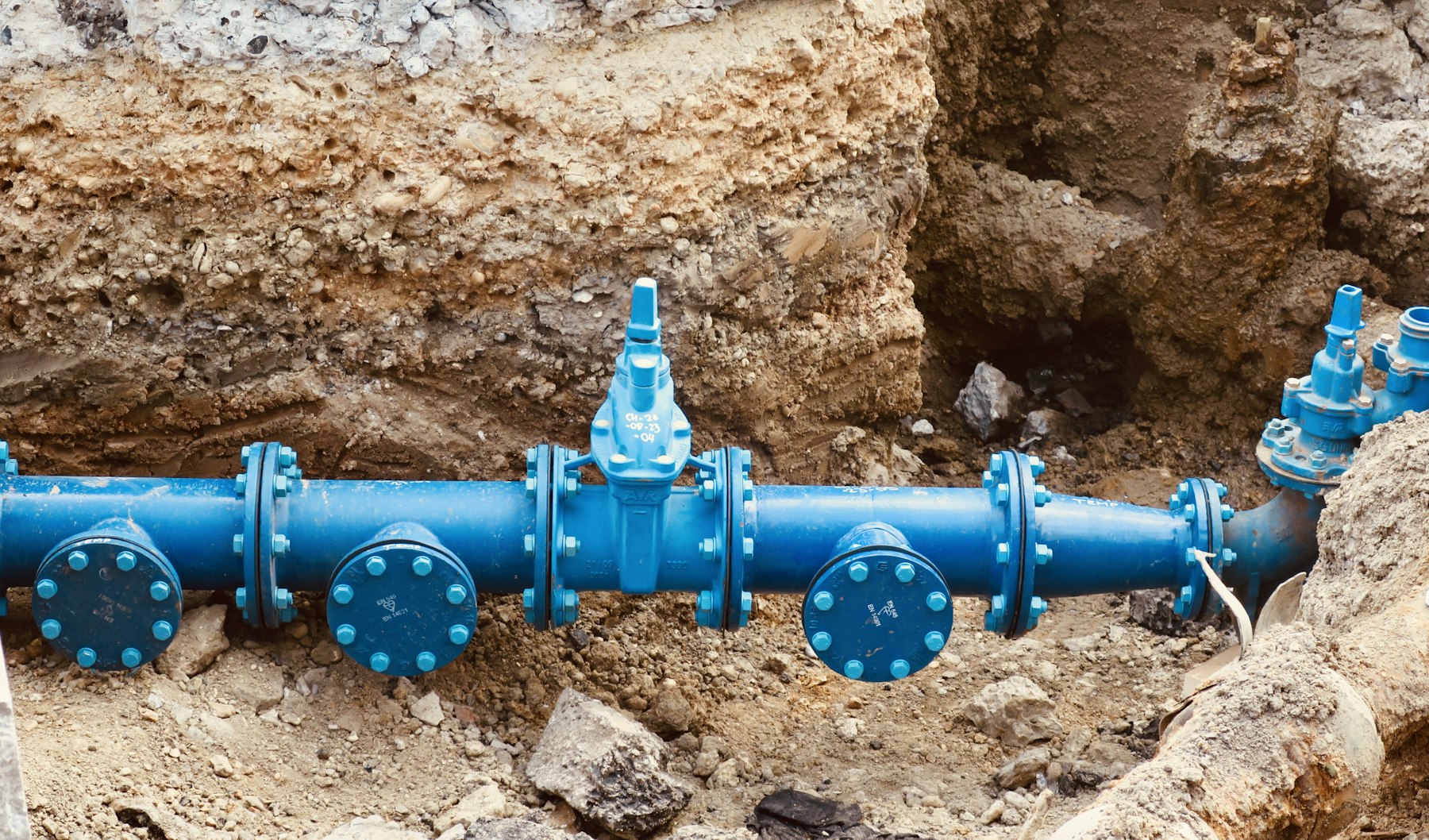
The Drain Authority is a drain and sewer specialist serving King and Snohomish counties from Ballard. Featured photo: a blue pressurized pipe and gate valves exposed in an open-cut excavation, by Rose Galloway Green on Unsplash.