Atmospheric Rivers Hit Seattle After a Dry October: What It Means for Storm Drains and Sewer Backups
November 9th, 2026
Seattle Sewer & Utility News
Seattle, WA · November 9, 2026
By The Drain Authority · Seattle drain and sewer specialists · WA Contractor Reg. #DRAINDA756MA
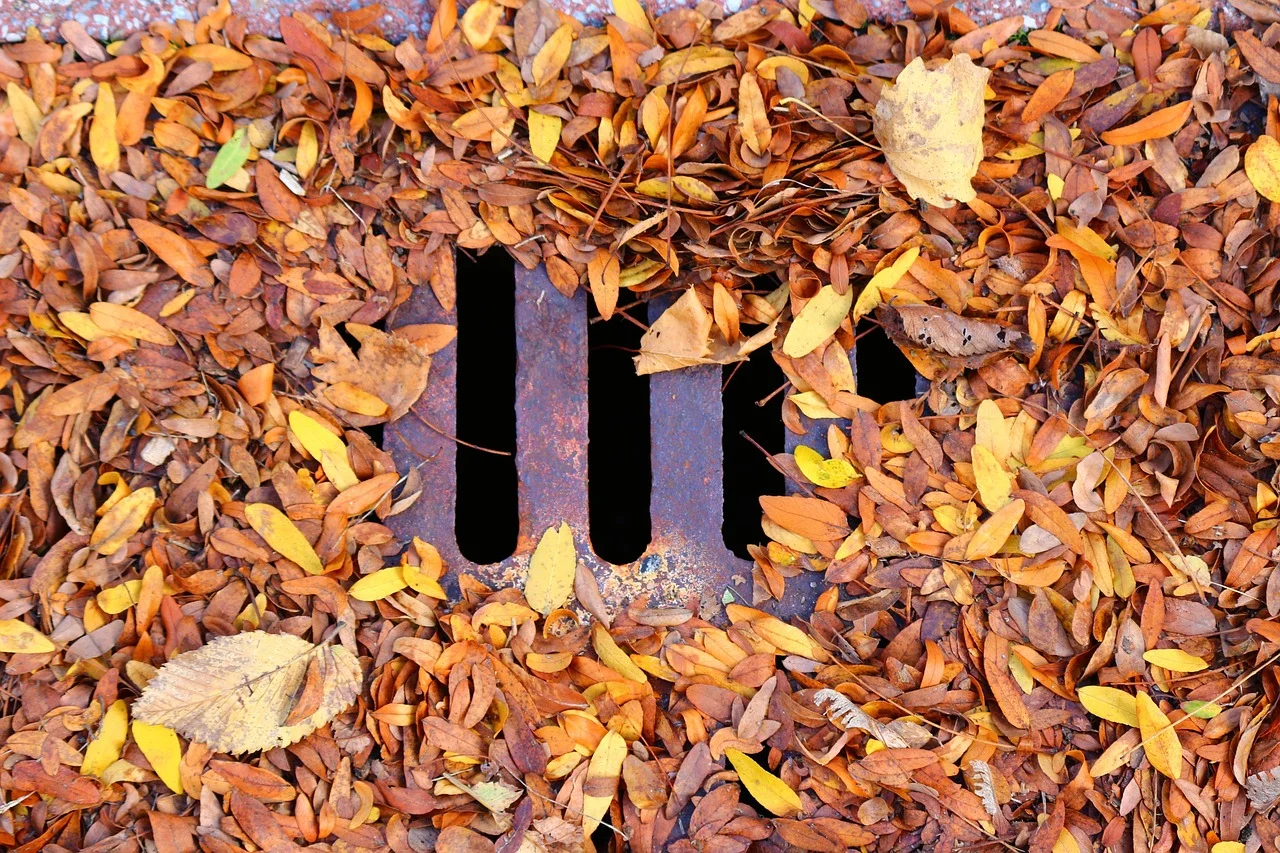
A line of Pacific storms is stacking up over Seattle this week, and the biggest of them, an atmospheric river due Friday into Saturday, arrives on the heels of the city’s seventh-driest October on record. Seattle Public Utilities is asking residents to rake leaves and clear storm drains. Those are the city’s drains. The ones that back up into basements belong to homeowners.
The short answer
What does this week’s rain mean for Seattle drains?
Expect about a half inch to 1 inch of rain inland Monday night into Tuesday and 1 to 2 inches Friday into Saturday, per KIRO Newsradio’s Ted Buehner. Clear the storm drain in front of your house and call SPU at 206-386-1800 for street flooding. Your side sewer, yard drains and any backwater valve are your responsibility, not the city’s.
1.2 in
Seattle’s October rain, its 7th-driest on record (FOX Weather)
1–2 in
Inland rain forecast Friday into Saturday (KIRO Newsradio)
1–2 in/hr
Peak rainfall rates in the heaviest downpours (AccuWeather)
206-386-1800
SPU 24/7 line for street flooding and clogged storm drains
The week ahead, storm by storm
Saturday’s system was mostly wind. KIRO Newsradio meteorologist Ted Buehner reported Monday that gusts reached 45 to 55 mph across the interior and that peak outages Saturday night were close to 70,000 customers across the region. FOX Weather put the statewide figure near 100,000; the two counts cover different areas and times.
The rain comes next. Buehner forecasts a half inch to 1 inch across interior western Washington from Monday night into Tuesday, a dry and unusually warm break Wednesday and Thursday, then a system with the characteristics of an atmospheric river Friday into Saturday, bringing 1 to 2 inches inland and 2 to 5 inches on the coast and in the mountains.
The storm sequence for western Washington, Nov. 7 to 14, 2026. Source: KIRO Newsradio meteorologist Ted Buehner via MyNorthwest, Nov. 9, 2026. Graphic by The Drain Authority.
AccuWeather says rainfall rates in the heaviest downpours could reach 1 to 2 inches per hour in some locations, and warns that rain that intense can overwhelm drainage systems, especially where fallen leaves are clogging storm drains. Its senior storm warning meteorologist, Tim Richards, put the trend simply:
“Runoff will increase from each storm as the ground becomes saturated.”
Tim Richards, AccuWeather
Buehner rates the river flooding threat as low for now, since rivers are running below normal after the dry October, though AccuWeather flags some risk of major flooding from southwestern Washington to Northern California later in the week. The concern this week is closer to home: streets, storm drains, and the pipes under your yard.
The city’s drains: what SPU is doing, and what it asks of you
SPU crews inspect and clear high-risk drainage spots before heavy rain, adjust staffing, and coordinate street sweeping with the Seattle Department of Transportation, according to KIRO Newsradio reporter James Lynch. They also respond around the clock to flooding and ponding around clogged drains. SPU spokesperson Ray Brown told KIRO that the utility’s core job comes down to public health and safety, and that calls to the operations response center at 206-386-1800 help crews decide where to go.
SPU asks residents to rake leaves before they reach the street, to clear a blocked grate with a rake or similar tool rather than by hand, and to stay on the sidewalk or curb while doing it. Food and yard waste customers can set out up to 10 extra bags of leaves on each collection day in November at no extra charge. AlertSeattle at alert.seattle.gov sends emergency updates.
The angle most storm coverage misses: the drain that floods your basement isn’t in the street
Leaf-clogged storm drains cause ponding on the road. Water coming up through a basement floor drain or the lowest toilet in the house is usually a different problem, and it sits on the private side of the system.
SPU is direct about ownership: if you own your home, you own your side sewer until it connects to the public sewer, and if your property has a backwater valve, maintaining it is on you. SPU’s side sewer guidance also explains why storms trigger backups: winter storms can overload the sewer system when stormwater and groundwater get in through roof gutters, sump pumps, area drains, or cracks and gaps in the pipe, and any blockage already in your side sewer adds to the risk.
That is why a dry October matters. When rain is scarce, roots keep working into loose joints and grease and debris settle in slow lines, a pattern we covered before the rain returned. The first sustained storms are when a partly blocked line gets tested.
Combined sewers: why heavy rain matters more in older Seattle
In older Seattle neighborhoods, one set of pipes carries both sewage and stormwater. King County manages 38 combined sewer overflow outfalls that serve areas larger than 1,000 acres, and the City of Seattle manages about 82 smaller ones, according to the county’s combined sewer overflow program. Each outfall is a relief point for its neighborhood: when heavy rain exceeds what the pipes can carry, a mix of stormwater and sewage can be released to local waters instead of backing up.
The county says its control program, started in 1979, has cut average annual overflow volume from about 2.3 billion gallons to roughly 1 billion. Under the state standard, a controlled outfall may overflow no more than once a year on a long-term average. The capacity of the public system is the region’s job. The condition of the pipe from your house to that system is yours.
Heavy rain sheeting across a street at night. Runoff that can’t reach a clear drain ponds at the curb. Photo: adege / Pixabay.
Before Friday: a checklist for Seattle homeowners
1Clear the storm drain in front of your house Rake leaves before they reach the street, use a rake on the grate, and stay on the curb. Report street flooding to SPU at 206-386-1800.
2Check your own yard, area and downspout drains These are private lines. If they pond or overflow in a normal rain, they will in this one. Our yard and area drain cleaning page covers what we clear.
3Know where your sewer cleanout is If a backup starts, the cleanout is where the line gets opened. Our sewer cleanout guide shows what to look for.
4Listen to the lowest drain in the house Gurgling, a slow floor drain, or a toilet that bubbles when the washer drains points to the main line, not a single fixture. That’s main sewer line cleaning, flat $200 to $600.
5Maintain your backwater valve if you have one SPU says the owner is responsible for its upkeep. A valve stuck open or closed won’t do its job in a storm.
6If backups keep recurring, film the line A sewer camera inspection shows whether you’re dealing with roots, a sag or a break, so the next fix is the right one.
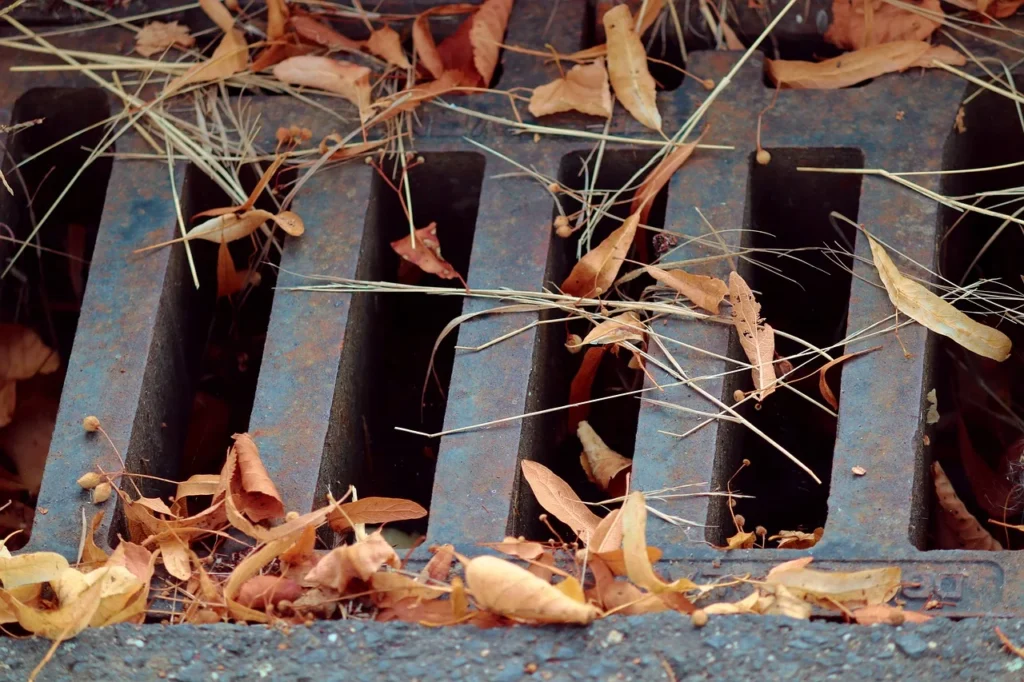
Leaves caught in a drain grate. Clearing one before the rain takes a minute with a rake. Photo: manfredrichter / Pixabay.
This week’s storms are a normal November test that comes after an abnormal October. SPU will work the street drains and wants calls at 206-386-1800 when they flood. Everything from your foundation to the public main is yours, and the first sustained rain after a dry month is when a weak side sewer shows itself. If your lowest drain is already sluggish, deal with it before Friday. For anything from a single clog to a backed-up main, see our drain cleaning in Seattle.
Frequently asked questions
How much rain is Seattle expected to get this week?
KIRO Newsradio meteorologist Ted Buehner forecasts about a half inch to 1 inch across interior western Washington from Monday night into Tuesday, then 1 to 2 inches from an atmospheric river Friday into Saturday, with 2 to 5 inches on the coast and in the mountains.
How dry was October 2026 in Seattle?
FOX Weather reported that Seattle had its seventh-driest October on record, with 1.2 inches of rain.
Who do I call about a flooded street or clogged storm drain in Seattle?
Seattle Public Utilities’ operations response center at 206-386-1800. SPU crews respond around the clock to flooding and ponding around clogged drains.
Is my side sewer the city’s responsibility?
No. SPU says that if you own your home or building, you own your side sewer until it connects to the public sewer pipe, and you are responsible for maintaining any backwater valve on your property.
Why do sewer backups happen in heavy rain?
SPU says winter storms can overload the sewer system when stormwater and groundwater get into sewer pipes through roof gutters, sump pumps, area drains, or cracks and gaps, and that any blockage in your side sewer adds to the risk of a backup.
Lowest drain gurgling before the big rain?
Owner-operated drain and sewer service from Ballard. Flat $200 to $600 drain and main line clearing, $0 trip fee, and the same rate evenings and weekends.
The Drain Authority is a drain cleaning, sewer camera inspection and hydro jetting company serving King and Snohomish counties from Ballard. Photos via Pixabay as credited. Timeline graphic by The Drain Authority from the KIRO Newsradio forecast.