Sewer Scope Before Buying a Seattle Home: What It Finds, What It Costs, Who Pays
November 8th, 2026
Home Buyer Guide
Seattle, WA · November 8, 2026
By The Drain Authority · Seattle drain and sewer specialists · WA Contractor Reg. #DRAINDA756MA
Last updated November 8, 2026
When you buy a Seattle house, you also buy the pipe that carries its sewage to the street, and it is often older than anyone alive. Seattle Public Utilities says that side sewer belongs to the owner all the way to the public main. A standard Washington home inspection doesn’t look inside it. A sewer scope does.
The short answer
Do you need a sewer scope before buying a house in Seattle?
Yes, for almost any older home. Washington’s home inspection rules cover only visible drain and waste lines, not the buried side sewer, and SPU says the owner is responsible for that pipe up to the public main. A camera inspection costs a few hundred dollars; a side sewer replacement averages $5,572 in Seattle, per Angi.
21%
of Seattle homes were built in 1939 or earlier (ACS 2024)
$300–$400
Our flat sewer scope price, footage included
$5,572
Average Seattle sewer line replacement, per Angi
$280
City of Seattle side sewer repair permit
Why a Seattle home inspection doesn’t cover the sewer line
Washington’s home inspector standards of practice spell out what the plumbing part of an inspection includes: visible water supply lines, visible waste, soil and vent lines, fixtures and the water heater, according to WAC 308-408C-100. The inspector runs water and checks that fixtures drain. The same rule says the inspector is not required to inspect plumbing components that aren’t readily accessible, or floor drains and exterior drain systems.
A buried side sewer is the definition of not readily accessible. A sink can drain fine during a two-hour inspection while the pipe under the front yard is cracked, full of roots, or sagging enough to hold water. Those faults show up later, usually after closing, usually as a backup into the lowest drain in the house.
“Have the side sewer inspected before you purchase a property.”
Seattle Public Utilities
Seattle’s housing is old, and so are its side sewers
Of Seattle’s 411,671 housing units, 87,038 were built in 1939 or earlier, about 21%, according to the U.S. Census Bureau’s 2024 American Community Survey. Add the 1940s and 1950s and 146,645 units, roughly 36% of the city, were built before 1960. The side sewer under most of those homes is as old as the house unless someone has replaced it.
Seattle housing units by decade built. Source: U.S. Census Bureau, American Community Survey 2024 1-year estimates, Table B25034. Chart by The Drain Authority.
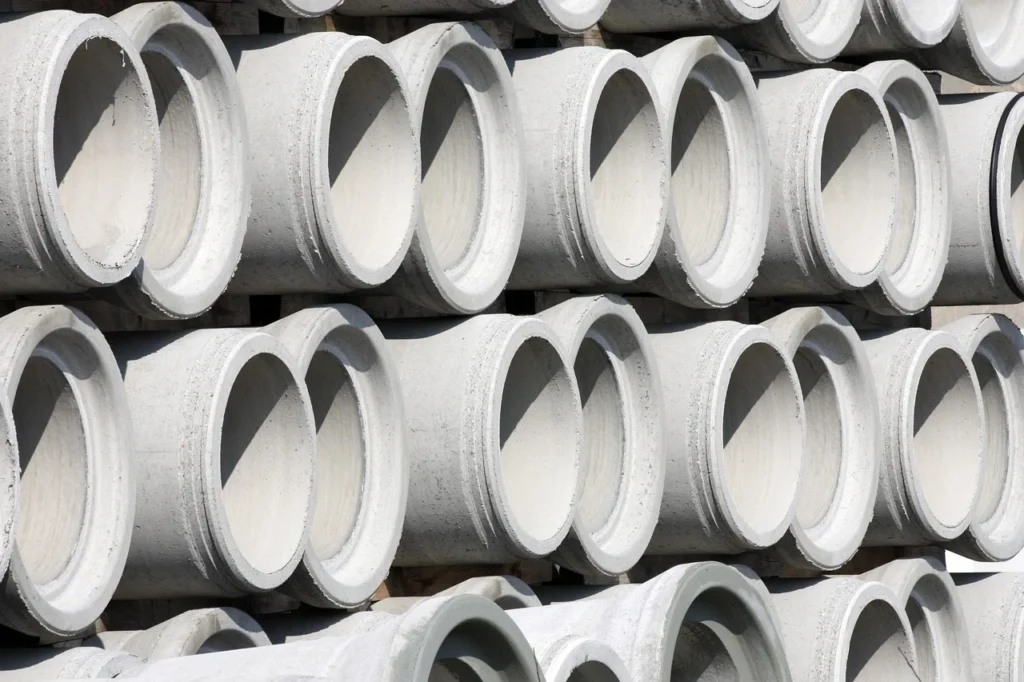
Age matters because of what those pipes are made of. SPU’s defect guide says many Seattle side sewers are concrete, and that older concrete and clay pipe laid without watertight joints is especially prone to roots. As the inner cement wall of a concrete pipe erodes, the stones in the mix show through. SPU calls that exposed aggregate a common and critical defect.
Concrete pipe sections. SPU says many Seattle side sewers are concrete, and erosion of the inner wall is a common, critical defect. Photo: mainblick / Pixabay.
What a sewer scope finds, using SPU’s own grading
A scope runs a waterproof camera from a cleanout or a pulled toilet down the side sewer toward the main, recording the whole run. What matters is how each defect is graded. SPU publishes its own severity scale, which is the most useful yardstick a Seattle buyer has, because it tells you which findings are cosmetic and which mean the pipe is done. Use these categories to read any scope report, including ours from a sewer scope inspection in Seattle.
Defect
What SPU says
SPU’s recommended action
Offset joints
Pipe segments that don’t line up. Debris builds at the joint; exposed joints can let soil wash away and leave voids.
Minor: no repair. Moderate: re-inspect in a few years. Severe: repair.
Sags (bellies)
Flat sections that hold water. Minor is under 25% of pipe diameter; moderate 25 to 50%; severe 50% or more.
Moderate: inspect every 2 to 5 years. Severe: higher chance of buildup and backups.
Cracks and fractures
From poor installation, poor bedding, roots or aging pipe.
Moderate: inspect every 1 to 2 years and budget for repair. Severe: repair.
Holes
Let soil and debris into the pipe, or wash soil away around it.
Repair, at every size SPU shows.
Root intrusion
Common in older concrete and clay pipe. Severe blocks 50% or more of the pipe.
Severe: inspect every 1 to 2 years and clean routinely.
Exposed aggregate
The inner cement wall has eroded and the stones show. Severe with holes is full structural failure.
Moderate: plan for repair. Severe: replace as soon as discovered.
Debris and grease
Reduce the pipe’s capacity; grease can block it completely.
Routine cleaning, plus repair if a defect is causing it.
Summarized from Seattle Public Utilities, Side Sewer Defects & Issues.
One practical catch from SPU’s repair guidance: cameras can’t see under water. If the line is backed up or a sag is holding water, the scope can’t grade what’s below the waterline. In that case the line gets cleared first, then filmed. If a seller’s scope report says a section was underwater, treat that section as unknown, not as fine.
The angle most buyer checklists miss: your pipe doesn’t stop at the property line
Most pre-purchase advice treats the yard as the boundary. Seattle’s doesn’t. SPU says the side sewer belongs to the owner until it connects to the public sewer, and its own diagram shows the owner’s pipe running past the property line all the way to the sewer main. SPU also says owners are responsible for clearing roots up to and within the connection to the main.
Two things follow for a buyer. First, the scope has to reach the main, not stop at the sidewalk; SPU’s guidance is that a rooter cable should be able to reach from the property’s side sewer to the city main, and the same logic applies to the camera. Second, check whether the line is shared. SPU says that where your pipe joins a neighbor’s before the main, the owners share maintenance from that junction on, and any recorded easement is held by King County and is sometimes noted on the side sewer card.
Who owns what. Based on Seattle Public Utilities’ side sewer ownership guidance; drawing by The Drain Authority, not to scale.
What a scope costs, and what skipping it can cost
Our flat price for a sewer camera inspection is $300 to $400, with a copy of the footage included. For comparison, Angi’s 2026 Seattle data puts the average sewer line camera inspection at $1,781, with a normal range of $451 to $3,342. The same page lists a standard camera inspection at $220 to $440 and specialty cameras at $870 to $2,180 or more, so ask what kind of inspection a quote covers and whether you get the video.
The other side of the ledger is the repair. Angi’s 2026 Seattle figures put a typical sewer line replacement at $2,817 to $8,327, averaging $5,572, at $60 to $220 per linear foot depending on material. Angi lists cured-in-place lining at $100 to $170 per foot. City permits add $280 for a side sewer repair, $375 for an alteration and $750 for new construction, per the same Angi page. SPU says a permit is always required for side sewer repair work, but not for root removal or unclogging.
Item
Seattle figure
Source
Sewer scope (The Drain Authority)
$300 to $400 flat, footage included
Our published price
Sewer camera inspection, Seattle average
$1,781
Angi, 2026 Seattle data
Side sewer replacement, typical range
$2,817 to $8,327 (avg. $5,572)
Angi, 2026 Seattle data
Replacement per linear foot
$60 to $220
Angi, 2026 Seattle data
Cured-in-place lining per foot
$100 to $170
Angi, 2026 Seattle data
Side sewer repair permit
$280
City of Seattle fee, via Angi
If a scope does find structural damage, the repair choices are the ones SPU lists: a spot repair, open-cut replacement, pipe bursting, or a cured-in-place liner. We explain how lining and digging compare in our guide to trenchless sewer repair in Seattle. SPU also notes that the Seattle Office of Housing offers home repair loans for side sewers to owner-occupants with low to moderate incomes.
How to use the scope in a Seattle home purchase
This is general information, not legal or real estate advice; your agent and your purchase agreement decide the mechanics. The steps below are the ones SPU’s guidance and the inspection rules point to.
1Pull the side sewer card first The Side Sewer Card Viewer shows where the line was permitted to run, and sometimes whether it’s shared. Our piece on reading your side sewer card walks through it. The card shows the route, not the condition.
2Book the scope inside your inspection window Schedule it alongside the home inspection, since the inspector isn’t required to look inside the buried line.
3Find the cleanout A scope through an exterior cleanout reaches the main most easily. If there isn’t one, it can be run from a pulled toilet. Our sewer cleanout service page covers what we look for.
4Make sure the camera reaches the main The owner’s pipe runs to the connection at the main, so a scope that stops at the property line leaves part of your pipe unseen.
5Get the video and the footage marks SPU recommends keeping a copy of any inspection video and having the provider note the distance to each problem and mark it on the ground.
6Get at least three written bids for any repair That’s SPU’s own recommendation. Bids may propose different methods; SPU lists spot repair, open cut, bursting and lining.
Does a Washington home inspection include the sewer line?
Not the buried part. Under WAC 308-408C-100, a home inspection covers visible waste, soil and vent lines. Inspectors are not required to inspect plumbing that is not readily accessible, or floor drains and exterior drain systems.
Who owns the side sewer in Seattle?
The property owner. Seattle Public Utilities says you own your side sewer until it connects to the public sewer pipe, and some properties share a side sewer, splitting responsibility from the point where the pipes join.
How much does a sewer scope cost in Seattle?
The Drain Authority’s flat price for a sewer camera inspection is $300 to $400, with the footage included. Angi’s 2026 Seattle data puts the average sewer line camera inspection at $1,781.
What does a sewer scope look for?
SPU’s defect guide lists offset joints, sags, cracks and fractures, holes, root intrusion, exposed aggregate in concrete pipe, and debris or grease. SPU treats severe exposed aggregate with holes as full structural failure and says to replace it as soon as it is found.
How much does it cost to replace a side sewer in Seattle?
Angi’s 2026 Seattle data puts a typical sewer line replacement at $2,817 to $8,327, with an average of $5,572. A City of Seattle side sewer repair permit is $280.
Buying in Seattle? Scope the sewer before you sign.
Flat $300 to $400 sewer camera inspection with the footage yours to keep. Owner-operated from Ballard, with a $0 trip fee. See all our Seattle drain cleaning services.
The Drain Authority is a drain cleaning, sewer camera inspection and hydro jetting company serving King and Snohomish counties from Ballard. Photos via Pixabay as credited. Charts and diagrams by The Drain Authority from the sources listed.