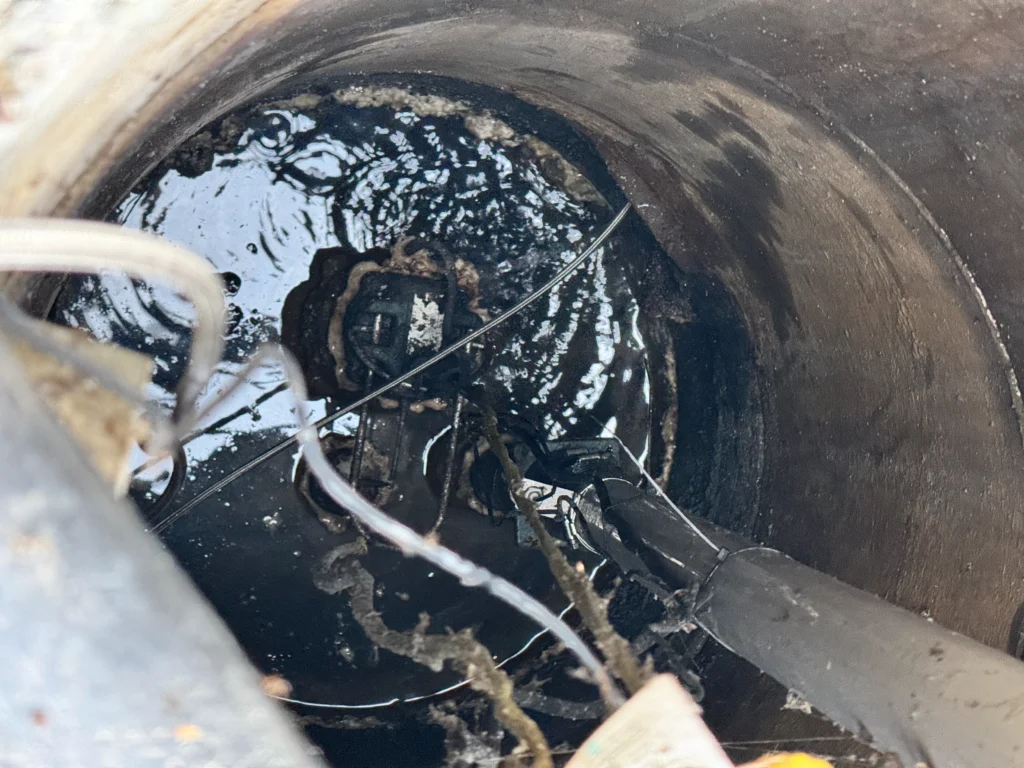
Everything here reflects how the work is actually done in Seattle housing stock: clay and cast iron laterals, mature street trees, long wet seasons, and side sewers that are older than most of the people who own them. If your question isn't answered below, call (206) 590-1455 and ask a technician directly.
If something is wrong right now
One fixture is slow
A single slow sink or tub is usually a local blockage, not a main line problem.
Clearing vs. cleaning →Several fixtures at once
Toilets gurgling while the shower drains points at the main line, not the fixture.
Main line symptoms →Backing up or overflowing
Stop running water to the house and get a technician on the phone.
Same-day service →On this page
Call a drain and sewer specialist rather than a general plumber. A specialist runs cable machines, jetters, and inspection cameras every day, carries the right cutter heads for your pipe size, and diagnoses the blockage instead of guessing at it.
General plumbing companies handle fixtures, water heaters, repipes, and gas. Drains are a side line for them, which is why a drain call often turns into a quote for something larger. A specialist's incentive is to clear the line, show you what caused it, and tell you whether it needs anything more.
For a single slow fixture, ask whether the company will cable the line and camera it in the same visit. For anything affecting multiple fixtures, ask whether they have a jetter on the truck. If the answer to either is no, keep calling. More on the distinction in why hiring a drain cleaner instead of a plumber saves money in Seattle.
Yes. Same-day appointments are routinely available across Seattle, the Eastside, and south Snohomish County, and active backups are treated as priority calls.
Call (206) 590-1455 and describe what you are seeing: which fixtures are affected, whether water is rising or receding, and whether there is sewage odor. That tells us whether to arrive with a cable machine, a jetter, or both, which is usually the difference between one visit and two.
Availability on any given day depends on the schedule, so the fastest path is a phone call rather than a form.
Stop sending water down the line. That means no laundry, no dishwasher, no showers, and no flushing in the affected part of the house until the blockage is cleared.
Every gallon that goes in has to go somewhere, and in a blocked main line it comes back up at the lowest fixture, usually a basement floor drain or a first-floor tub. Holding off on water use is the single most effective thing you can do before anyone arrives.
Skip the caustic drain chemicals. They rarely move a main line blockage, they sit in standing water where a technician has to work, and on aging cast iron they accelerate damage to the pipe wall. If you have already poured something in, say so when we arrive so the crew can take precautions.
Price depends on four things: which line is blocked, whether there is an accessible cleanout, what caused the blockage, and whether the line needs cabling or jetting. A kitchen branch line and a root-packed main sewer are not the same job and should never carry the same price.
Ask for the price before work starts, and ask what it includes. A quote that covers the attempt but not the outcome is how a small number becomes a large one. Ours is quoted for the job in front of us, and you hear the number before anything is switched on.
Call (206) 590-1455 with your address and a description of the symptoms and you will get a real figure for your situation rather than a teaser rate.
Usually it is a lead-generation price, not a service price. The advertised rate typically applies only through an existing ground-level cleanout, only to one line, and only if the blockage clears quickly. Almost nothing about a real Seattle main line meets all three conditions.
The pattern is consistent: the technician arrives, finds the advertised conditions are not met, and the visit converts into a much larger quote, often for a repair the homeowner has no way to verify. The teaser number bought the appointment, not the work.
Before you book any discounted special, ask what it excludes, what happens if the line does not clear, and whether a camera inspection is included or upsold. We wrote up the mechanics in detail in the $99 drain cleaning scam in Seattle.
Jetting costs more than cabling because it is a different service: it scours the full inner wall of the pipe rather than punching a channel through the blockage. Pipe diameter, line length, access, and what is inside the pipe all move the number.
Grease in a restaurant line, scale in cast iron, and fine root hair in a clay lateral each take different nozzles and different amounts of time on the hose. A company that quotes jetting sight-unseen at a flat rate is quoting a time limit, not a result.
In most cases we camera the line first so the quote reflects what is actually in the pipe. See our Seattle hydro jetting service for what the process involves.
Because they are usually quoting two different jobs. One is clearing a path through the blockage so water moves again; the other is cleaning the pipe wall back to full diameter so the blockage does not rebuild in a few months.
The cheaper quote is often the first. It is a legitimate service and sometimes the right one, but it should be described honestly rather than sold as a permanent fix.
When you compare quotes, compare scope: what gets used, how far down the line, whether the pipe is inspected afterward, and what happens if it clogs again. Price alone tells you very little.
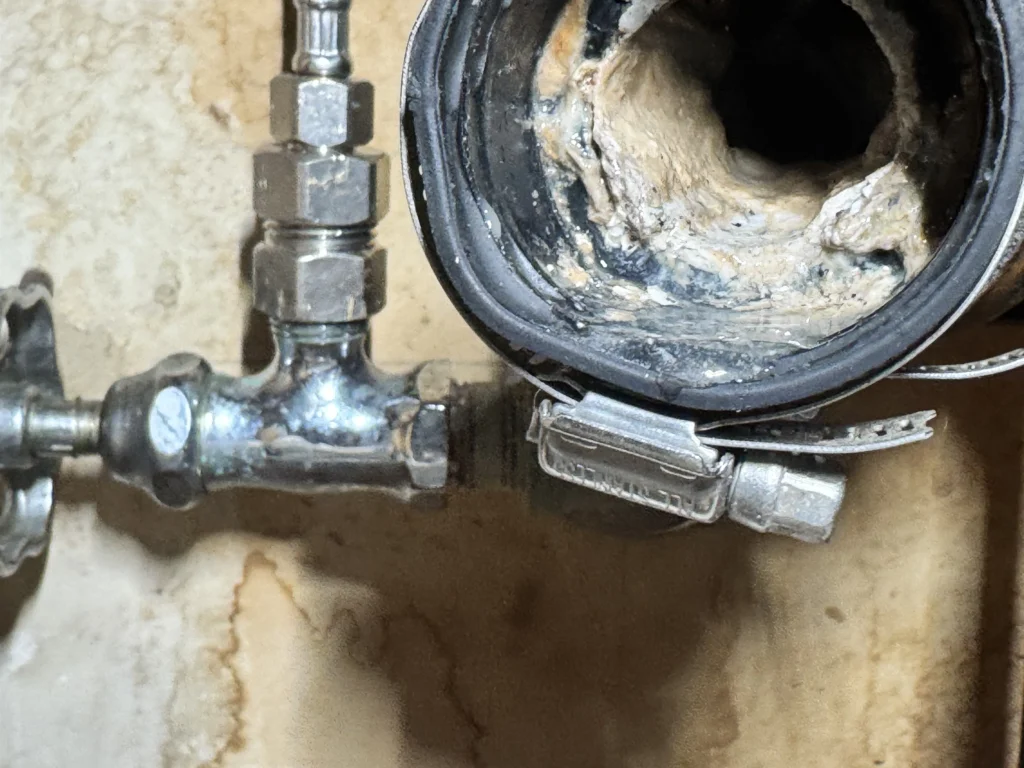
Hydro jetting pushes a high-pressure hose down the line with a nozzle that fires water backward against the pipe wall. The rear jets pull the hose forward and scour grease, sludge, scale, and fine root hair off the interior surface, flushing the debris downstream.
The nozzle is matched to the pipe and the problem. A chisel nozzle attacks a hard obstruction, a rotating nozzle strips grease and scale, and a penetrating nozzle opens a fully blocked line before the cleaning pass. Getting that choice wrong is why some jetting jobs disappoint.
Because jetting restores the full inside diameter rather than a channel through the middle, the line takes longer to re-clog. That is the entire argument for the extra cost.
It is worth it when the pipe wall is coated and overkill when it is not. Recurring clogs, grease accumulation, scale in cast iron, and root hair in a lateral are jetting problems. A single object lodged in a bathroom branch line is not.
The honest test is whether the same line has clogged before. If a drain has been cabled twice in two years, cabling it a third time buys a few more months. If it has never clogged before and a specific item went down it, a cable is the right and cheaper tool.
A camera inspection settles it in a few minutes. We walk through the decision in hydro jetting near me: worth it or overkill.
Clearing opens a path through a blockage so water flows again. Cleaning removes the buildup from the pipe wall so the line returns to its full diameter. Most companies advertise cleaning and deliver clearing.
A cable with a small head punches a hole through grease or roots. Water moves, the customer is happy, and the remaining buildup starts catching debris again immediately. That is why so many drains clog on a predictable cycle.
Both services have a place. The problem is being charged for one and told you received the other. Ask which you are getting, and ask for camera confirmation afterward. Our Seattle rooter service covers cable work; Seattle drain cleaning covers the full-diameter work.
It can, if the line is jetted blind. Pipe that is already cracked, offset, or severely corroded should be inspected before a jetter goes in, and pressure should be matched to the pipe rather than run at maximum by default.
This matters in Seattle more than in newer markets. Plenty of homes here still run original clay or cast iron laterals, and those materials fail at joints and along corroded seams rather than in the middle of a healthy section.
Our standard is to camera first on any line with unknown condition or known age, then choose pressure and nozzle from what the footage shows. If the pipe is too far gone to jet safely, we say so instead of jetting it anyway. For heavily scaled cast iron, pipe descaling in Seattle is often the correct approach.
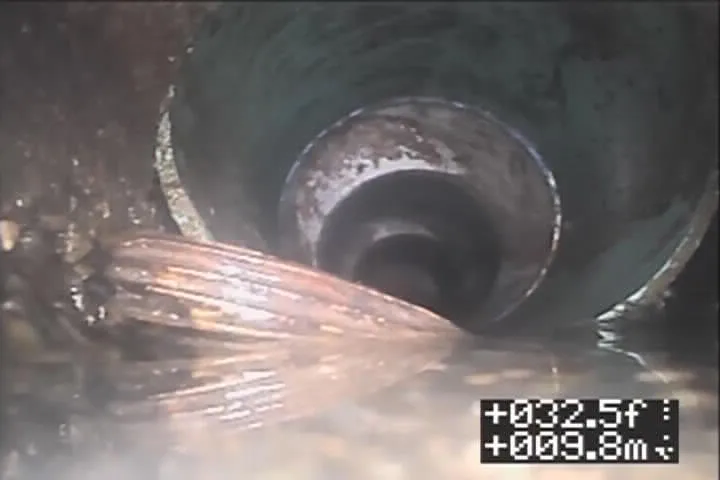
A camera inspection shows the pipe material, its condition, and the exact location and nature of any defect: root intrusion, offset joints, bellies holding standing water, cracks, scale, and grease coating.
It also shows depth and position. A locator on the camera head lets us mark the defect on the ground surface, which is the difference between a targeted repair and an exploratory trench across your yard.
What it cannot do is see through standing water or past a full blockage, which is why a line is usually cleared or cleaned first and inspected second. Details on sewer camera inspection in Seattle.
Yes, particularly for anything built before about 1980 or on a lot with mature trees. A standard home inspection does not include a sewer scope, and the side sewer becomes the buyer's problem the moment the sale closes.
Seattle's older neighborhoods are full of original clay laterals running under established street trees. A scope before closing either gives you peace of mind or gives you a documented defect to negotiate against, and a side sewer replacement is not a small line item.
Schedule the scope during your inspection contingency, not after. A defect found before closing is a negotiating position; the same defect found in month two is simply your bill.
Yes. You get the footage and an explanation of what is in it, including where any defect sits relative to the house and how urgent it is.
This matters because footage is leverage. It lets you get a second opinion on a recommended repair, negotiate during a real estate transaction, or simply confirm in a year that the line still looks the way it did.
If a company inspects your sewer and will not hand over the recording, treat that as the answer to a different question.
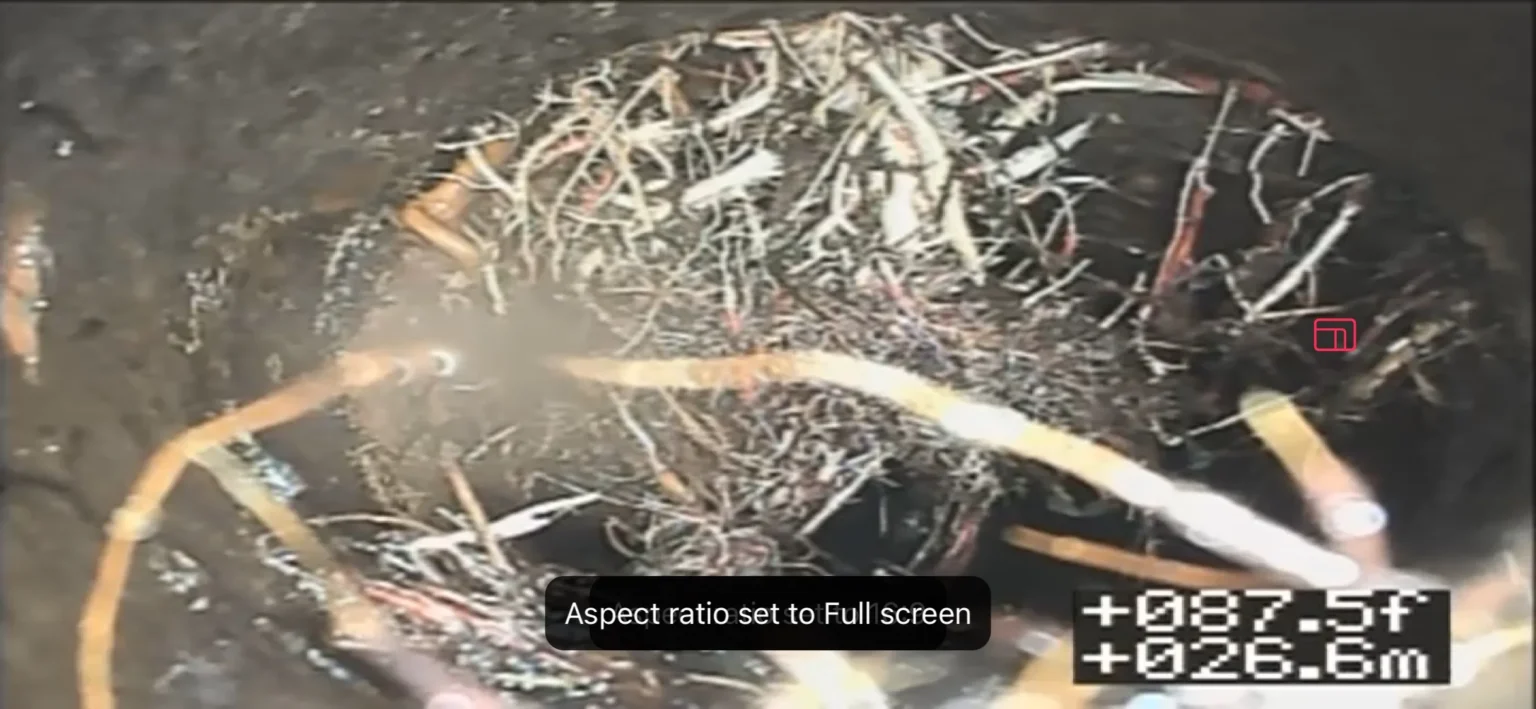
The tell is multiple fixtures behaving badly at once: toilets gurgling when the washing machine drains, a tub backing up while a sink runs, and clogs that return on a seasonal rhythm rather than randomly.
Single-fixture problems are almost never roots. Roots live in the main line outside the house, so they affect everything draining through it. A clog that clears easily and returns three months later is the classic pattern.
A camera inspection confirms it and shows how far the intrusion has progressed. More on the symptoms and the fix in tree root drain clogs in Seattle.
Not by cleaning alone. Roots enter through cracks and open joints, and as long as that opening exists, roots will find it again. Cutting and jetting restores flow and buys time; it does not close the door they came through.
How much time depends on the pipe. A hairline intrusion at one joint in otherwise sound clay might stay clear for a couple of years on a maintenance cycle. A lateral with multiple offset joints will come back faster no matter how well it is cleaned.
The permanent answer is repair or replacement of the failed section, which is a decision the camera footage should drive. Anyone recommending a full replacement without showing you the pipe is asking you to take it on faith.
Three reasons stack up: original pipe materials that degrade, mature trees planted close to the line, and decades of grease and scale narrowing the inside diameter.
Clay laterals shift and open at the joints as ground moves. Cast iron builds internal scale that both restricts flow and gives debris something to catch on. Neither material fails suddenly; they narrow gradually until a normal week of laundry and showers finally exceeds what the pipe can carry.
Neighborhoods like Ballard, Greenwood, and Wallingford see this constantly. More on the pattern in drain cleaning for older Seattle homes.
In Seattle, if you own the building you own the side sewer all the way to the public sewer main under the street, including the portion that runs beyond your property line. Seattle Public Utilities is responsible only from the main onward.
This surprises most homeowners, and it is the single most expensive assumption in residential plumbing. A failure in the stretch under the planting strip or the street is still a private repair.
Maintenance and repair responsibility for private side sewers is set out in Seattle Municipal Code Chapter 21.16. SPU publishes the details, mapping tools, and financial assistance information on its side sewer resource page. If you share a side sewer with a neighbor, responsibility is shared too.
Repair and replacement work on a side sewer requires a permit in Seattle. Routine cleaning, cabling, jetting, and camera inspection do not.
The distinction is straightforward: opening the ground and altering the pipe is permitted work; maintaining the pipe from inside through an existing cleanout is not. Surrounding jurisdictions in King and Snohomish counties have their own requirements, so confirm locally before any excavation.
If a contractor proposes to dig without mentioning permits, that is worth pausing on. Unpermitted side sewer work follows the property and surfaces during the next sale.
Look up the company's contractor registration through Washington State Labor & Industries before you book. The lookup shows registration status, bond and insurance, and any history attached to the business.
Two different things get confused here. Contractor registration is a business requirement administered by L&I. Plumber certification is an individual credential governed by RCW 18.106. Drain cleaning is not plumbing work under that chapter, which is why drain specialists operate as registered contractors rather than certified plumbers.
The Drain Authority is registered in Washington under DRAINDA756MA. You can confirm that and any other company through the L&I contractor verification tool. Read more about our Seattle team.
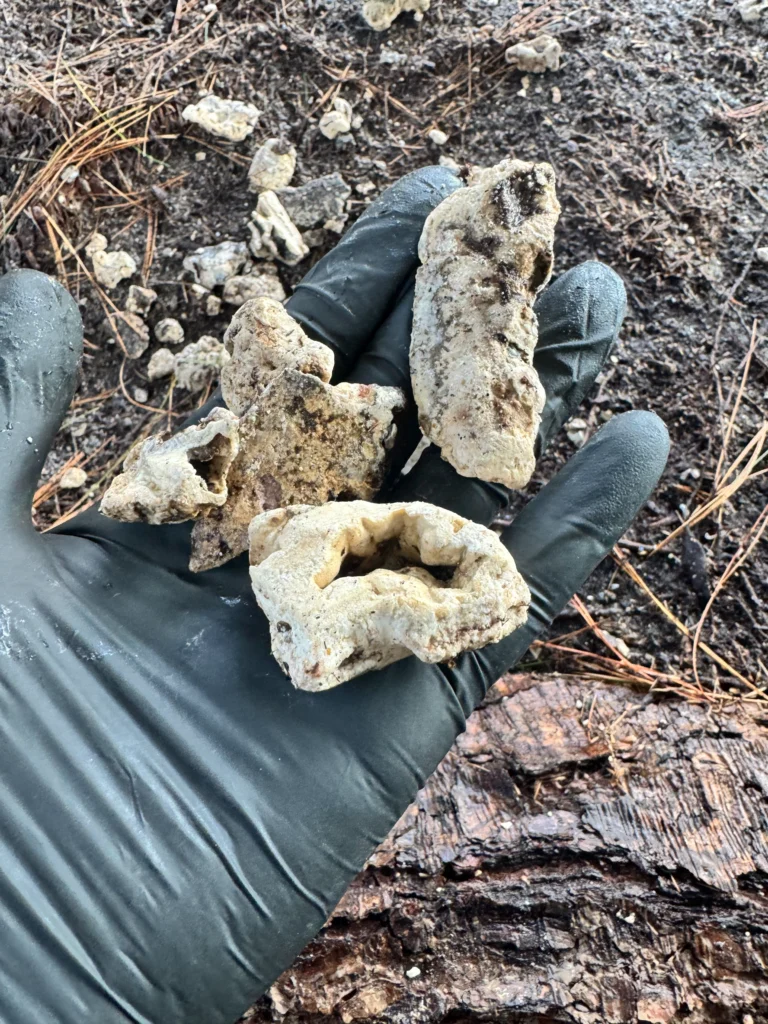
There is no universal interval, and any company quoting one is guessing. The right cadence comes from your pipe: its material, its condition on camera, what is growing near it, and how the household uses water.
A newer home on PVC with no trees nearby may never need scheduled maintenance. An older lateral with known root intrusion at a joint benefits from a planned cycle, because a scheduled cleaning costs a fraction of an emergency backup and the cleanup that follows.
Commercial kitchens are the exception and do need a set schedule, because grease loading is continuous and predictable.
Keeping grease and wipes out of the line does most of the work. Cooking fats poured down a sink cool and coat the pipe wall; so-called flushable wipes do not break down and catch on anything already there.
Grease and root intrusion are two of the leading causes of sanitary sewer overflows nationally, which is why the EPA tracks them under its NPDES program. The same two things cause most of the residential backups we see.
Beyond that: pour cooking fat into a container and bin it, use strainers in kitchen and shower drains, run hot water after washing up, and treat repeat clogs as information rather than an inconvenience. A line that clogs on a schedule is telling you something the camera can confirm. The full walkthrough lives in our Seattle drain cleaning guide, and the DIY limits in professional drain cleaning vs. DIY.
Yes. Restaurants, multi-family buildings, retail, and light industrial properties are a regular part of the work, including scheduled grease line maintenance and after-hours service that avoids business disruption.
Commercial lines fail differently from residential ones. Volume is higher, grease loading is constant, and a single blocked kitchen line can close a dining room for the night. That changes the strategy from reactive clearing to scheduled jetting on a known cycle.
Property managers running multiple buildings can have lines mapped and inspected once and maintained on a predictable schedule after that. See commercial drain cleaning in Seattle.
We work throughout King and Snohomish counties from our base in Ballard, covering Seattle and its neighborhoods, the Eastside, and the north-end cities along the I-5 and SR-522 corridors.
Each city below has its own service page with local detail on housing stock, common pipe materials, and the problems we see most often there.
The full list is on our Seattle drain cleaning service areas page.
Still have a question about your line?
Describe the symptoms and a technician will tell you what is likely happening, what it takes to confirm it, and what the visit involves. No diagnosis over the phone that we cannot back up with a camera.
The Drain Authority · 5608 17th Ave NW, Suite 2025, Seattle, WA 98107 · WA Contractor Reg. DRAINDA756MA




Drain backed up? Get a flat price before we start.
Same-day service when the schedule allows. No trip fee to look. Open daily, 8 AM to 8 PM.

The Drain Authority is a Seattle drain and sewer cleaning company based in Ballard, serving homes and businesses across King and Snohomish counties.
5608 17th Ave NW, Suite 2025Recent Drain & Sewer Work
Real jobs from Seattle, Bellevue and Renton: roots, grease, scale, floor drains and sewer camera inspections.
Compare drain and sewer services© 2026 The Drain Authority LLC. All rights reserved. Powered by PSC